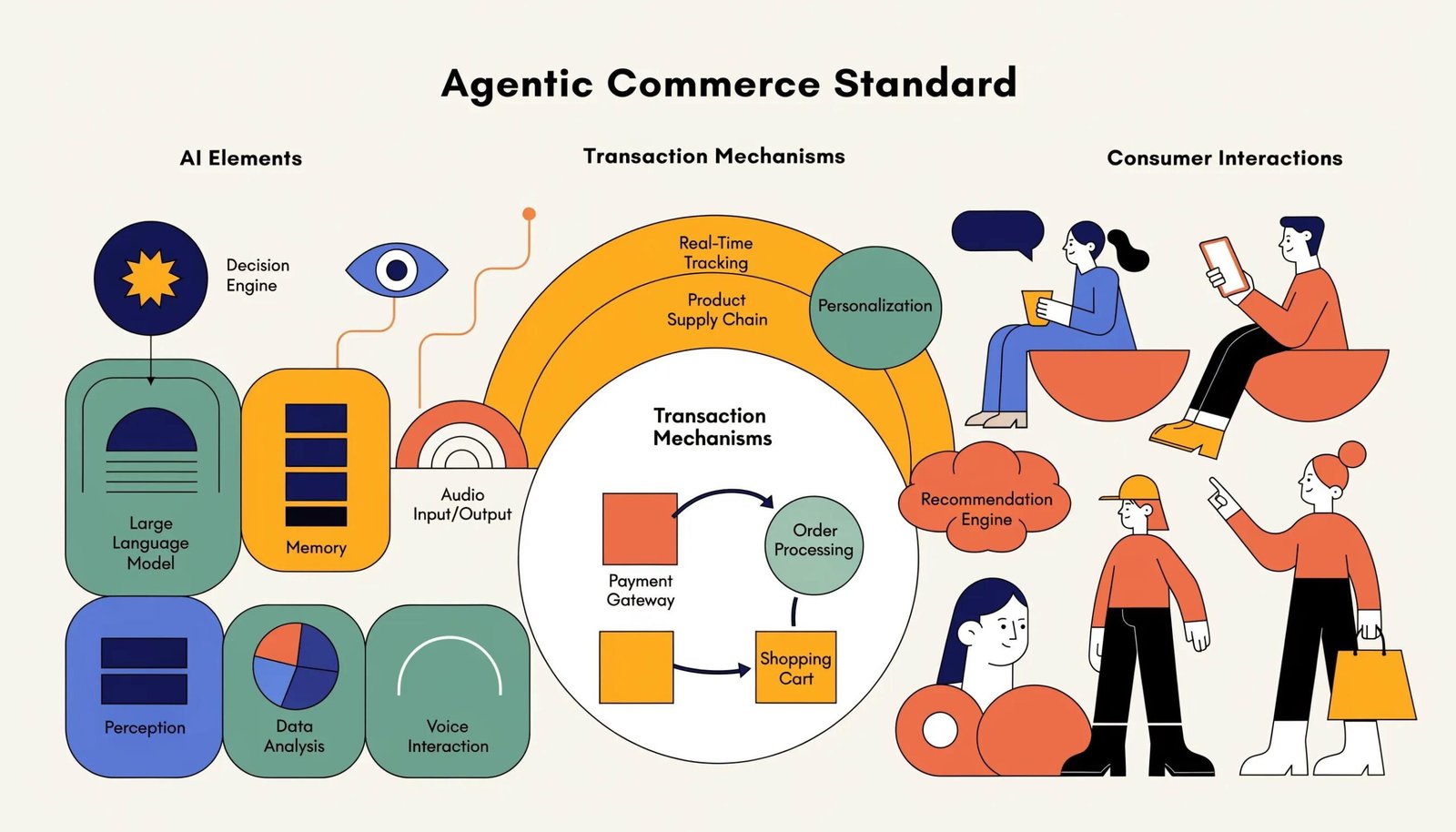
The Zero Click Buyer: How Decision-Makers Purchase via AI Agents
Bottom Line Up Front (BLUF):
The rise of the zero click buyer marks the end of the traditional website traffic funnel. Modern decision-makers no longer click through search results to browse product pages; they instruct AI assistants to research, compare, and complete procurement directly. To win revenue in this zero-click era, businesses must structure their offerings with machine-readable Answer Engine Optimization (AEO) and agentic checkout readiness.
The Rise of the Zero Click Buyer in Modern Procurement
For decades, marketing teams designed customer acquisition around website visits. The playbook was simple: attract traffic, capture contact information through lead forms, and nurture prospects through long email sequences. Every marketing asset assumed a human was clicking links and browsing web pages.
Today, high-value decision-makers are delegating procurement to autonomous AI assistants. When a corporate buyer needs enterprise software, legal support, or marketing services, they do not spend hours clicking search links. They prompt ChatGPT, Claude, or Perplexity to analyze requirements, filter vendors, and deliver the top recommendation.
The traditional sales funnel is collapsing into a single moment: the prompt. A buyer no longer searches, compares, and narrows a list over several weeks. They ask an AI assistant, and whoever gets named in that answer just won the first and most important step of the sale. This shift is what we call Prompt-to-Sale.
Comparing Buyer Journeys: The Traditional Visitor vs The Zero Click Buyer
AEO is client acquisition. When AI recommends you by name to a buyer who has never heard of you, that is a customer you did not have to chase. To capture market share today, leadership teams must understand how the zero-click purchasing path differs from traditional web browsing.
| Journey Stage | Traditional Click-Based Buyer | The Zero Click Buyer (AI Assisted) |
|---|---|---|
| Information Search | Clicks 5 to 10 blue links and reads marketing pages | Prompts AI for a synthesized breakdown of top solutions |
| Vendor Evaluation | Manually compares pricing tables and case studies | AI model validates credentials, compliance, and deliverables |
| Sales Interaction | Fills out lead forms and waits for sales outreach | Zero-friction close: AI initiates instant booking or purchase |
| Website Traffic Footprint | High page views and bounce rates | Zero clicks required; transaction occurs directly at prompt |
The 3 Pillars of Zero-Click Revenue Capture
Capturing revenue from zero-click buyers requires a shift from human-oriented marketing design to machine-actionable data architecture:
1. Complete Semantic Entity Mapping
AI search models cannot recommend what they do not clearly understand. If your service offerings are buried inside vague marketing copy, AI models fail to recognize your core capabilities. Implementing structured schema markup and clear entity definitions ensures answer engines index your exact value proposition.
2. Verifiable Outcome Benchmarks
When an AI agent shortlists vendors, it looks for verified credibility. Customer case studies backed by hard numbers, structured reviews, and published industry benchmarks give the AI model the confidence needed to recommend your brand over competing options. You can explore how we format verifiable data across our AI visibility and optimization services.
3. Autonomous Agent Transaction Readiness
Autonomous AI-driven transactions are available right now, and enterprise competitors are already adopting them. The primary challenge for most businesses is an adoption gap. By providing open calendar endpoints, transparent pricing structures, and machine-readable service tiers, your business allows AI agents to schedule demos or complete contracts on the spot.
In the zero-click era, website traffic is a vanity metric. What matters is recommendation share: how often your company is selected by AI agents when buyers are ready to purchase.
Leadership Action Checklist: Preparing for Autonomous Buyers
Business executives can evaluate their organization’s readiness for zero-click commerce using this four-step checklist:
- Eliminate Hidden Information: Ensure your core deliverables, onboarding timeframes, and baseline costs are publicly accessible rather than hidden behind contact forms. Review our transparent service pricing framework for reference.
- Deploy Full-Stack Schema Markup: Structure all core pages with Organization, Service, Product, and FAQ JSON-LD metadata so autonomous agents can parse your facts instantly.
- Enable Instant Scheduling: Integrate frictionless booking integrations that allow AI agents to place meetings directly on executive calendars without back-and-forth emails.
- Audit AI Recommendation Share: Test your category prompts in major answer engines to measure how frequently your brand appears in top recommendations.
The Bottom Line: Winning Deals Without Website Clicks
The zero click buyer represents a massive opportunity for companies that adapt early. While traditional competitors waste budget fighting over declining website clicks, businesses optimized for AEO secure high-margin clients directly through AI recommendations.
By making your offerings recommendable and actionable for AI models today, you establish an automated client acquisition engine that compounds over time. For continued analysis on the future of autonomous commerce, read our ongoing coverage on the insights blog.
Frequently Asked Questions About Zero Click Buyers
What exactly is a zero click buyer?
A zero click buyer is a decision-maker who uses conversational AI assistants to research, evaluate, and purchase solutions without clicking traditional search engine links or browsing standard website pages.
How do answer engines evaluate vendors for zero-click recommendations?
Answer engines analyze structured entity data, factual citations across the web, verified customer testimonials, and direct service clarity to select the top 1 to 3 best solutions for a user’s prompt.
Does a zero-click strategy mean we should abandon our website?
No. Your website becomes the authoritative structured data hub and verification source that AI engines and autonomous agents crawl to validate your credentials and offerings.
How do we measure success when website traffic drops but revenue grows?
Success is measured by recommendation share in AI search, inbound lead warmth, shortened sales cycle length, and lower blended customer acquisition cost (CAC).