
Why LLM Engine Optimization (LEO) Is the Future of Digital Visibility
1. Introduction
Search has transformed more profoundly than any algorithm update in the past decade. Users no longer just type keywords into a search bar; they ask ChatGPT to recommend a local restaurant, ask Google Gemini to compare insurance plans, and ask Claude or Perplexity to explain which service provider best fits their needs. The decision is made within the AI response, not on a results page.
This shift signals the decline of keyword-only search behavior and the rise of AI-generated discovery. Businesses that relied solely on ranking in the top ten blue links are now finding that visibility requires a fundamentally different strategy. LLM Engine Optimization (LEO) is that strategy. It focuses on making your business readable, credible, and recommendable to the AI systems your customers already use. Platforms like AgentBuyable are helping businesses make this transition from traditional search optimization to full AI visibility.
2. What Is LLM Engine Optimization (LEO)?
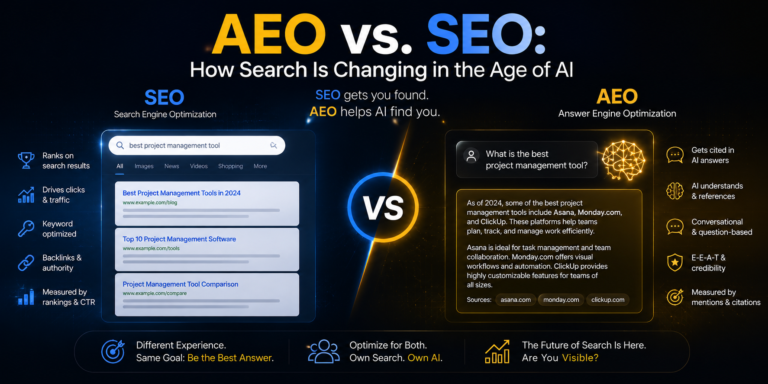
LLM Engine Optimization, or LEO, is the practice of optimizing a business’s digital presence so that large language models (LLMs) can accurately interpret, index, and surface it in AI-generated responses. While traditional SEO targets ranking algorithms that return lists of links, LEO targets the systems that synthesize information and deliver direct answers.
The distinction matters deeply. When a user asks ChatGPT for the best accountant in their city, the AI does not return a ranked list of websites. It generates a recommendation based on its understanding of which businesses are trustworthy, well-documented, and clearly described in machine-readable formats. LEO is the discipline of ensuring your business meets those criteria.
AI systems like ChatGPT, Google Gemini, Claude, and Perplexity all depend on trust signals, structured content, entity clarity, and factual consistency to determine which businesses they confidently recommend. LEO addresses each of these dimensions in a way traditional SEO was never designed to do.
For a deeper look at how LLM SEO is changing digital visibility, this guide from Savit Interactive explores the growing role of AI-driven search.
3. Why Traditional SEO Is No Longer Enough
Traditional SEO was built for a world where users typed short keyword phrases into a search engine and selected from a list of links. That world is rapidly disappearing. Search behavior has shifted toward conversational queries, and AI systems are increasingly delivering summarized answers that eliminate the need to click through to any website at all.
Industry research suggests that AI-generated search experiences are reshaping how users discover businesses online. As platforms like ChatGPT, Google Gemini, and AI Overviews become more widely used, businesses are increasingly competing not only for traditional rankings but also for visibility within AI-generated answers and recommendations.
AI-driven discovery is influencing customer decisions earlier in the buying journey, often before a user even visits a website. This shift is encouraging businesses to focus more on structured content, trust signals, conversational search optimization, and consistent digital branding across platforms.
Businesses that adapt to these evolving AI search behaviors are more likely to improve visibility, credibility, and long-term digital discoverability as AI-assisted search continues to grow.
AgentBuyable helps businesses make this transition by auditing their existing digital presence, identifying LEO gaps, and implementing the content and technical structures that AI systems reward.
4. Why LEO Matters in 2026
AI assistants have become the first point of contact between customers and businesses for an expanding range of decisions. Users ask AI tools for the best local services, product comparisons, booking assistance, pricing estimates, and business recommendations as a matter of daily habit.
This is not a future trend. It is the current reality. Search engines have evolved beyond retrieving links; they now synthesize answers, evaluate competing claims, and increasingly influence purchasing decisions before a user ever visits a website.
For businesses that have not optimized for AI discovery, the consequence is invisibility in the systems their customers trust most. If your content is not optimized for LLMs, AI search engines will omit your brand, and you will lose potential leads to competitors who have invested.
The competitive pressure is accelerating. Service businesses, eCommerce brands, and local companies are all competing for the same AI citations, and the businesses that establish strong LEO signals now will compound that advantage as AI search continues to grow. The future of search is not about ranking higher. It is about becoming the answer.
5. Key Components of LEO
AI-Readable Website Content

Content must be structured so that AI systems can extract meaning quickly and accurately. This means clear headings that reflect real user questions, concise paragraph answers, semantic HTML structure, and content that is written to inform rather than to keyword-optimize. AI systems reward clarity and punish ambiguity.
Structured Data and Schema Markup
Schema markup and JSON-LD communicate your business identity, services, pricing, reviews, and location in machine-readable formats that AI systems can parse instantly. Without structured data, AI must guess at what your business does and often gets it wrong or skips you entirely.
Authority and Trust Signals
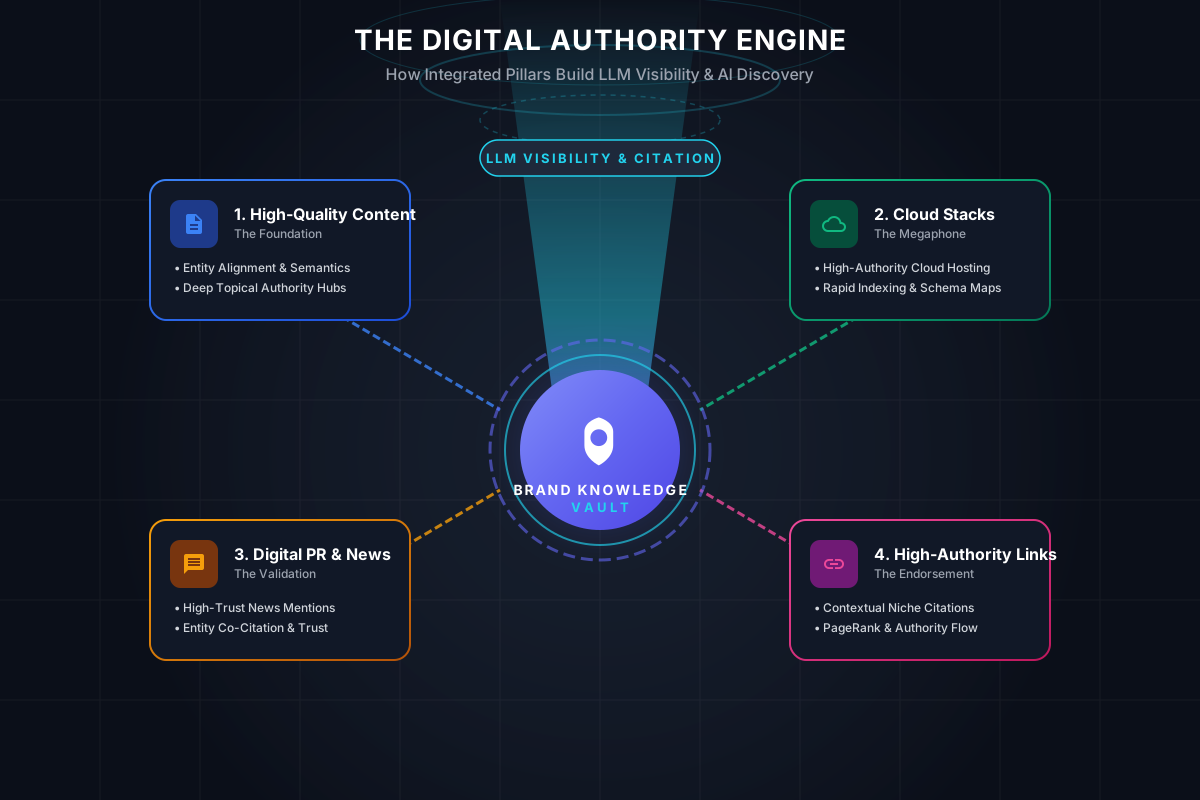
AI systems evaluate trust through multiple signals: volume and recency of reviews, consistency of your business information across directories, quality of backlinks, and presence on authoritative third-party platforms. Wikipedia, Reddit, review websites, and “best-of” guides are commonly used sources that inform LLM outputs, making it important to build a presence on the platforms AI systems already trust.
Conversational Content Optimization
AI assistants are trained on conversational language and respond to conversational queries. Content that mirrors how customers actually phrase their questions, including long-tail question-based formats, is far more likely to be extracted and cited by LLMs than content written in formal, keyword-heavy prose.
Entity-Based SEO
Businesses must train AI models to recognize their brand as an authority within their category. This is accomplished through entity-based optimization: ensuring your business name, services, location, and identity are consistently and clearly defined across your website, schema markup, and all third-party references.
Consistent Business Information
Name, address, phone number, service descriptions, and operating hours must match precisely across your website, Google Business Profile, social platforms, and online directories. Inconsistencies signal unreliability to AI systems and reduce the probability of recommendation.
Fast and Mobile-Friendly Experiences
Page speed and mobile usability affect crawlability and indexing for both traditional search engines and AI systems. Slow or poorly optimized sites create friction in the data collection process that AI crawlers use to build their understanding of your business.
The Shift to AI-Driven Discovery and Agentic Commerce
Step 1: AI Crawls Online Content
AI systems scan websites, business listings, review platforms, social media profiles, and structured data sources. They collect every available signal about what a business is, what it does, and how customers experience it.
Step 2: AI Understands Context and Meaning
Large language models go beyond surface-level text matching. They analyze entities, identify relationships between topics and services, and build a contextual understanding of your business that informs how it responds to relevant user queries.
Step 3: AI Evaluates Authority and Trust
The AI weighs the quality and volume of your reviews, the consistency of your business information across platforms, the authority of sources that mention your business, and the expertise conveyed in your content. LEO values E-E-A-T (Experience, Expertise, Authoritativeness, Trustworthiness), fact-checked accuracy, and content that aligns with how LLMs process information.
Step 4: AI Matches User Intent
When a user submits a conversational query, the AI interprets the intent behind the question and matches it against its indexed understanding of businesses in that category. The more precisely your content and schema align with real user language, the stronger the match.
Step 5: AI Generates Recommendations
Businesses with strong LEO signals, complete schema, authoritative reviews, and clear entity definitions appear in AI-generated answers. Those without these signals are simply absent from the recommendation.
Step 6: AI Supports Actions
The most advanced AI integrations go beyond recommendations. With booking schema and AI-powered transaction platforms, users can schedule appointments, request quotes, or initiate purchases directly through the AI interface, turning a recommendation into revenue in a single interaction.
Step 7: Continuous Optimization Improves Visibility
LEO is not a one-time implementation. Brands that begin tracking citations, analyzing third-party mentions, and aligning their content with LLM visibility signals now will gain a measurable advantage as these systems mature. Updating content regularly, maintaining accurate business information, and monitoring AI citation performance are all ongoing requirements.
AgentBuyable manages this continuous optimization process for businesses, ensuring that their LEO signals remain current and competitive as AI platforms evolve.
7. Common Mistakes Businesses Make with AI Visibility
Many businesses are unknowingly undermining their AI discoverability through avoidable mistakes:
- Relying entirely on traditional SEO tactics designed for keyword ranking, not AI citation
- Ignoring structured data and schema markup, leaving AI with no machine-readable signals
- Publishing generic content without a clear intent, specific answers, or an entity definition
- Maintaining outdated business information that conflicts across platforms
- Having no FAQ or conversational content that mirrors how customers actually ask questions
- Weak or inconsistent review signals that fail to establish trust with AI systems
- Slow or poorly optimized mobile websites that hinder AI crawlability
- Failing to monitor or track AI citation performance makes improvement impossible
8. Benefits of Investing in LEO
Businesses that commit to LEO gain advantages that compound over time as AI search continues to displace traditional results pages:
- Better visibility in AI-generated answers across ChatGPT, Gemini, Perplexity, Claude, and Google AI Overviews
- Increased brand authority and trust recognized by AI systems across multiple platforms
- More qualified traffic with higher conversion intent, since AI-referred visitors are already in decision mode
- Higher probability of being recommended when customers ask AI assistants for the best option in your category
- Improved customer experience driven by accurate, consistent, and AI-accessible business information
- Competitive advantage in AI ecosystems where most businesses have not yet adapted
- A future-proof digital marketing strategy that strengthens as AI search grows
9. Why Choose AgentBuyable
AgentBuyable is designed for the LEO era, offering a complete platform for businesses that want to become AI-visible, AI-readable, and AI-buyable.
LEO Audit and Gap Analysis: AgentBuyable begins with a comprehensive audit of your existing digital presence, identifying every gap in schema markup, entity consistency, content structure, and trust signals that is reducing your AI visibility.
Full Schema Implementation: The platform implements and maintains the complete range of structured data types, including LocalBusiness, Service, FAQ, Review, Pricing, Booking, and Organization schema, all validated and kept current.
AI-Ready Content Strategy: AgentBuyable optimizes your website content for conversational query patterns, entity clarity, and the E-E-A-T signals that LLMs use to evaluate authority, ensuring your content is written in the language AI systems respond to.
AI-Powered Booking and Transaction Integration: Beyond visibility, AgentBuyable connects your structured data with AI-powered booking and payment systems, enabling users to take action directly through AI interfaces, turning recommendations into measurable revenue.
Cross-Platform Consistency Management: The platform monitors and maintains consistent business information across your website, Google Business Profile, directories, and social platforms, ensuring that the trust signals AI evaluates are always accurate and aligned.
AI Citation Tracking and Reporting: AgentBuyable provides analytics specifically designed for LLM visibility, showing where your business is being cited in AI-generated responses, which schema types are driving appearances, and where further optimization will have the most impact.
Designed for modern service-based businesses, AgentBuyable removes the complexity of LEO and delivers a measurable, ongoing competitive advantage in AI-powered discovery.
10. Conclusion
LLM Engine Optimization is not a future consideration. It is the defining digital marketing discipline of 2026. As AI assistants become the primary interface through which customers discover, evaluate, and choose businesses, the ability of those AI systems to read, trust, and recommend your business determines your growth.
Traditional SEO remains important as a foundation, but it is no longer sufficient on its own. Businesses must now optimize for AI assistants, not just search engines, and the window for early adoption is still open. Businesses that invest in LEO now will build compounding advantages in AI citation frequency, trust signals, and AI-powered conversion rates that latecomers will struggle to overcome.
AgentBuyable is the trusted partner for businesses making this transition, providing the technical implementation, content strategy, and AI integration needed to become genuinely discoverable in the AI systems customers use every day.
Frequently Asked Questions
What Is the Difference Between LEO and Traditional SEO?
Traditional SEO helps websites rank in search results using keywords, backlinks, and technical optimization. LEO focuses on helping AI systems like ChatGPT and Gemini understand, trust, and recommend your business directly in AI-generated answers.
Do You Need to Replace SEO With LEO?
No. SEO and LEO work together. SEO builds online authority and visibility, while LEO improves AI discoverability through structured data, conversational content, and AI trust signals across platforms.
How Long Does It Take to See LEO Results?
Some improvements, like schema markup and structured data, can impact visibility within weeks. Stronger AI trust signals, reviews, and entity authority are usually built over several months with ongoing optimization.
Which AI Platforms Does LEO Help Optimize For?
LEO improves visibility across major AI systems, including OpenAI ChatGPT, Google Gemini, Claude, Perplexity, Google AI Overviews, and AI-powered voice assistants.
How Does AgentBuyable Help With LEO?
AgentBuyable provides schema implementation, AI-ready content optimization, booking integrations, citation tracking, and cross-platform consistency to improve long-term AI visibility and discoverability.