SEO vs AI Search: Why Traditional SEO Fails in Answer Engines (And What Replaces It)
Compare SEO vs AI search to discover why traditional keyword tactics fail in answer engines and how structured AEO captures top 1-3 brand recommendations.

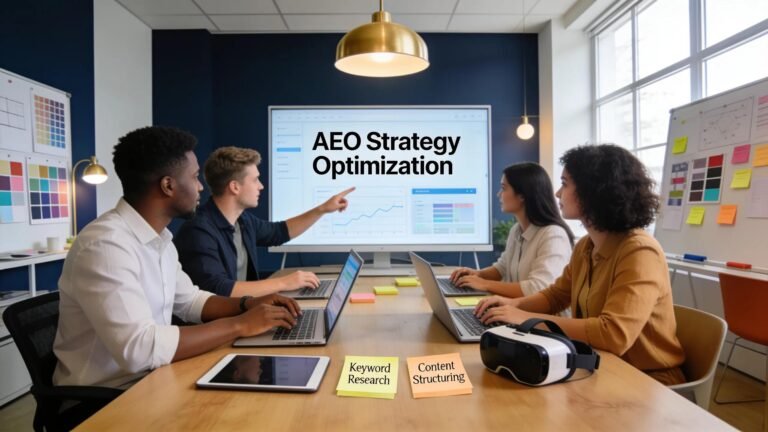
Compare SEO vs AI search to discover why traditional keyword tactics fail in answer engines and how structured AEO captures top 1-3 brand recommendations.
Discover how prompt-to-sale pipelines enable AI agents in ChatGPT and Claude to recommend services and execute autonomous purchases for your business.

Vector proximity engineering aligns brand entity attributes and semantic triples to minimize cosine distance in LLM embedding spaces, securing the top 1-3 recommendation slots in AI search.
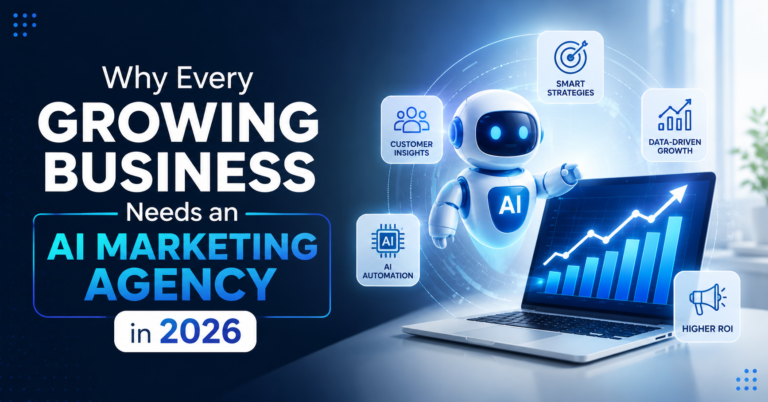
Marketing has changed faster in the last two years than in the previous decade combined. Buyers no longer discover brands the way they used to, and the tools marketers rely on have shifted just as quickly. This is exactly why so many companies are now turning to an AI marketing agency to keep pace, stay…
A few years ago, a B2B buyer researching project management software would type a query into Google, click through a handful of blue links, and compare vendors based on whatever landed on page one. Today, that same buyer is just as likely to open ChatGPT, Claude, Perplexity, or a Gemini-powered search and ask a direct…
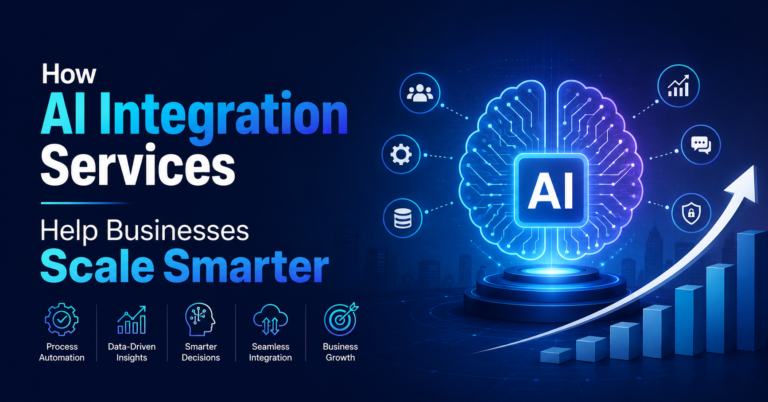
Artificial intelligence has moved from an experimental add-on to a core part of how modern businesses operate. Yet many companies still struggle to connect AI tools with their existing systems, data, and workflows in a way that actually delivers results. This is exactly where dedicated integration support comes in. Rather than treating AI as a…
Search behavior has changed faster in the last two years than in the previous two decades. More buyers now ask ChatGPT, Perplexity, Gemini, or Google’s AI Overviews for recommendations instead of typing a query into a traditional search box and clicking through ten blue links. For B2B SaaS and service brands, that shift raises a…
A few years ago, the first place someone looked for a plumber, a project management tool, or a private dining venue was a search engine results page. Today, more of those same questions go straight to an AI assistant: “Which project management tool is best for a 20-person marketing team?” “Find me a dentist near…
More buyers are asking AI assistants for recommendations before they ever visit a website. “What’s the best CRM for a small agency?” “Find a med spa near me with good reviews.” “Which project management tool works best for remote teams?” The assistant answers, often just one or two names, and that’s the shortlist the buyer…

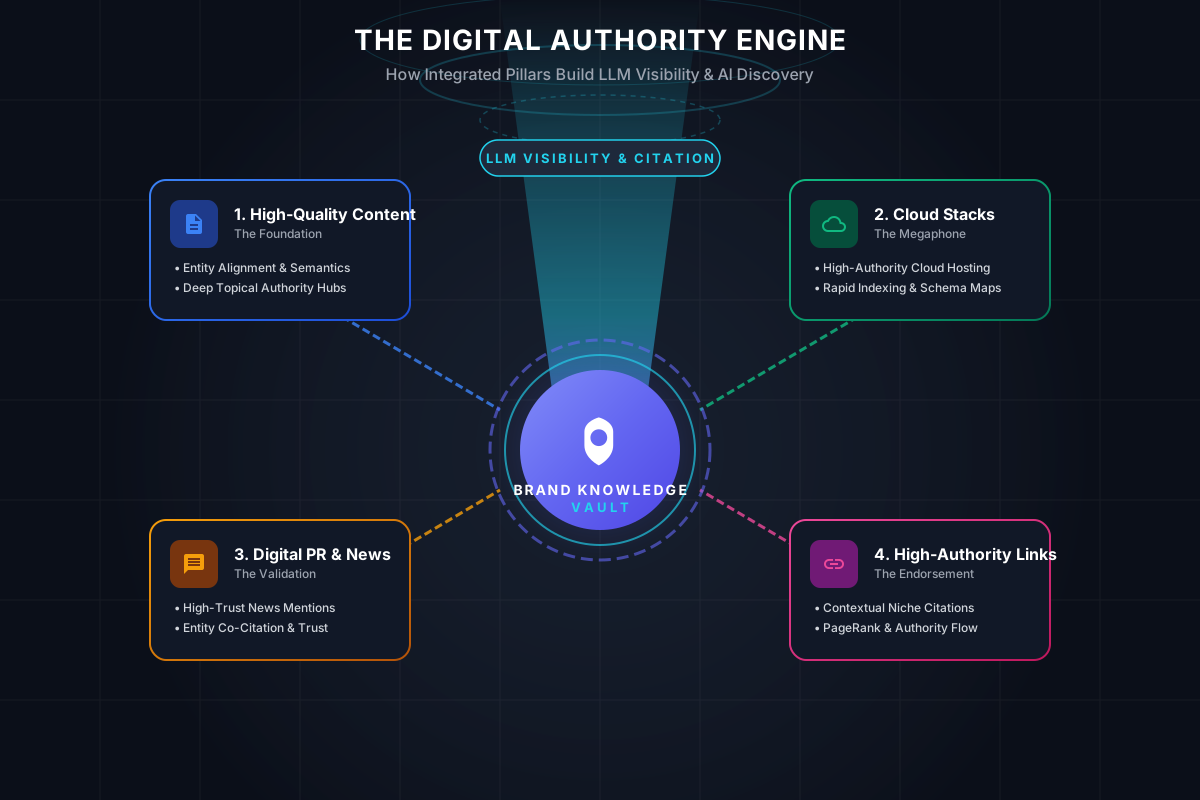
Unlock your website’s potential by embracing the Digital Authority Engine! Boost your SEO ranking now and lead the charge in the digital landscape.
The landscape of online visibility is undergoing a radical transformation. Traditional Search Engine Optimization (SEO) focused on making websites discoverable by search engine crawlers, primarily for human users. However, with the ascendancy of AI assistants like ChatGPT, Gemini, and Copilot, the paradigm is shifting towards AI-driven discovery. Businesses must now optimize their content and online presence not just for search engines, but for the sophisticated algorithms and natural language understanding capabilities of these AI agents.
This evolution means that simply ranking high on Google is no longer sufficient. AI assistants are becoming the primary interface for many users seeking services and information. They process information differently, prioritizing structured data, clear intent, and direct answers. Consequently, businesses need to understand how AI agents "read" and interpret their online content to ensure they are not only found but also acted upon by these powerful new tools.
AI assistants and Large Language Models (LLMs) thrive on structured data. Unlike human readers who can infer meaning from unstructured text, AI agents require information to be presented in a clear, organized, and machine-readable format. This allows them to efficiently extract key details, understand relationships between entities, and accurately respond to user queries. Implementing structured data is crucial for ensuring your business's offerings are easily understood and actionable by AI.
Formats like JSON-LD, Microdata, and RDFa are essential for embedding semantic meaning into your website's content. This data can describe your services, operating hours, location, pricing, and availability in a way that AI agents can directly process. For instance, using schema markup to define your services as "offers" with specific properties enables AI to understand precisely what you provide and under what conditions, significantly improving your chances of being recommended or booked.
For businesses to truly become "buyable" by AI agents, a programmatic transaction layer is essential. This layer bridges the gap between AI's discovery capabilities and the actual execution of a service. It allows AI agents to not only find a business but also to initiate and complete transactions, such as scheduling appointments, processing payments, or confirming bookings, without human intervention.
Implementing a programmatic transaction layer involves integrating your business systems with APIs that AI agents can interact with. This could include systems for scheduling, inventory management, and payment processing. By enabling direct, automated interactions, businesses can cater to the efficiency demands of AI-driven commerce, ensuring that when an AI agent identifies a need, it can seamlessly fulfill it through your services.
In the age of AI assistants, content citation is the new benchmark for authority and trustworthiness. As AI agents become primary research tools, their tendency to cite sources directly influences user perception and decision-making. For businesses, being cited by an AI assistant is akin to receiving a strong endorsement, driving traffic and potential customers to their offerings.
To achieve AI citation, content must be accurate, comprehensive, and easily verifiable. This involves presenting information clearly, backing up claims with data, and ensuring that your website provides a robust and authoritative source. The AEO Content Framework, for example, emphasizes creating content that is not only human-readable but also structured in a way that AI can confidently reference, thereby building a bridge of trust between your brand and the AI-powered user.