What Is an AI Visibility Audit and How Does It Work?
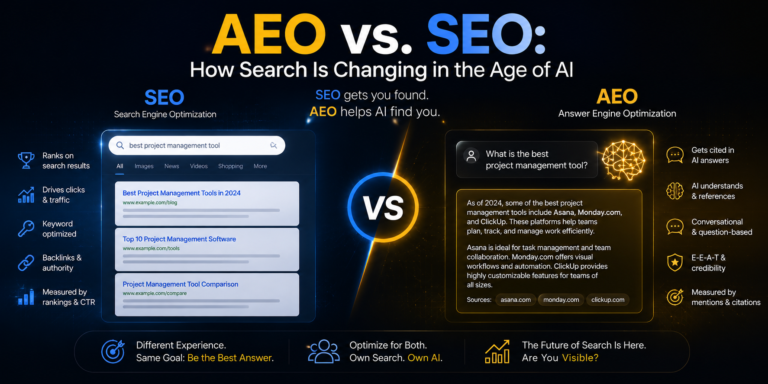
A few years ago, a B2B buyer researching project management software would type a query into Google, click through a handful of blue links, and compare vendors based on whatever landed on page one. Today, that same buyer is just as likely to open ChatGPT, Claude, Perplexity, or a Gemini-powered search and ask a direct question: “What’s the best project management tool for a 50-person marketing agency?”
The answer they get back is generated, not ranked. And if your company isn’t part of that answer, you may never find out you were left out.
This shift is why more B2B SaaS founders, marketing leaders, and service businesses are starting to ask a new question: how do we know if AI systems even know we exist? That question is exactly what an AI Visibility audit is designed to answer.
What Is an AI Visibility Audit?
An AI Visibility audit is a structured evaluation of how a business, its products, and its expertise show up when people use AI-powered tools to research, compare, and make buying decisions. Instead of measuring where your website ranks in a search engine results page, it measures whether AI assistants and answer engines mention your brand at all – and if they do, what they say about you.
This includes checking:
- Whether AI tools recognize your company and describe it accurately
- Whether you’re mentioned when someone asks about your category or use case
- How you’re positioned relative to competitors in AI-generated answers
- Whether the information AI systems draw on about your business is current, complete, and consistent
For a B2B SaaS company, this might mean testing whether an AI assistant recommends your platform when asked about “best CRM for small sales teams.” For a consulting firm, it might mean checking whether your name comes up when someone asks an AI tool to suggest firms with expertise in a specific niche.
The underlying idea is simple: if buyers are increasingly asking AI instead of searching manually, then being visible inside those AI-generated answers is becoming as important as being visible in traditional search.
Why AI Visibility Matters for B2B Businesses
B2B buying journeys are research-heavy. Buyers compare vendors, read reviews, ask peers, and now increasingly consult AI tools before ever speaking to a salesperson. If an AI assistant doesn’t know your company exists, or describes you inaccurately, you may be quietly excluded from consideration – without a single click, impression, or lead ever being logged.
This matters differently across business types:
- B2B SaaS companies competing in crowded categories (project management, CRM, HR tech) need to be included when AI tools generate shortlists of relevant vendors.
- Service businesses and consultants rely on being recommended for specific expertise – an audit can reveal whether AI tools associate your firm with the right specialties.
- Companies with strong SEO but weak AI presence may discover that ranking well on Google doesn’t automatically translate into being cited or recommended by AI systems, which often draw on different signals and sources.
The risk isn’t hypothetical. If a competitor is mentioned by name in AI-generated answers and you aren’t, that competitor gains a form of discovery advantage that traditional analytics won’t show you – because there’s no webpage visit to track.
How an AI Visibility Audit Works
A well-run AI Visibility audit follows a structured process rather than a single spot-check. Here’s how it typically unfolds:
1. Goal definition. The audit starts by clarifying what matters most to the business – is the priority being recommended for a specific product category, being cited as an expert source, or improving how accurately AI tools describe your offering?
2. Buyer-question research. Next, the audit identifies the real questions your buyers are likely asking AI tools – not generic industry terms, but the actual phrasing a prospect might use, such as “what’s a good alternative to [competitor] for mid-market teams” or “which agency specializes in [specific service] for healthcare companies.”
3. AI testing. Those questions are then run across AI-powered platforms to observe what comes back – whether your brand appears, how it’s described, and what context surrounds the answer.
4. Brand and product analysis. The audit examines how your company, products, and value proposition are represented when they do appear, checking for accuracy, completeness, and outdated information.
5. Competitor comparison. The same questions are tested against competitors to understand your relative position – are you mentioned alongside them, ahead of them, or not at all?
6. Gap identification. Patterns emerge from this testing: missing mentions, inaccurate descriptions, outdated positioning, or categories where you’re absent entirely.
7. Recommendations. Based on the gaps, the audit produces practical next steps – content, structured data, publishing patterns, or positioning changes that could improve how AI systems understand your business.
8. Implementation. Recommendations are put into action, often in collaboration with marketing, content, or product teams.
9. Re-testing. Because AI Visibility isn’t static, the same questions are tested again over time to see what’s changed and whether improvements are holding.
It’s worth being clear-eyed about one thing: AI-powered platforms differ in the models they use, the data sources they draw on, and the retrieval methods behind their answers. A result from one AI tool is a data point, not a universal truth – no single platform should be treated as representative of every AI experience a buyer might have. That’s why a credible audit tests across multiple tools rather than relying on one.
What an AI Visibility Audit Measures
While the specifics vary by business, most audits look at:
- Presence – does your brand appear at all in relevant AI-generated answers?
- Accuracy – is the information about your company, pricing, or positioning correct?
- Context – what companies, categories, or use cases is your brand associated with?
- Competitive standing – how often do you appear relative to direct competitors?
- Source consistency – is the information AI tools seem to be drawing from consistent across the places your business is described online?
What Problems an Audit Can Uncover
Running this kind of audit tends to surface issues that wouldn’t show up in a traditional SEO report, such as:
- A company being described using outdated product names or discontinued features
- A consulting firm being associated with the wrong specialty entirely
- A SaaS product being omitted from comparison-style answers where it’s a natural fit
- Inconsistent descriptions of what a business actually does across different AI tools
- Competitors appearing consistently while your brand appears only sporadically or not at all
None of these problems are visible through Google Analytics or standard rank trackers, which is part of why AI Visibility requires its own dedicated evaluation.
How Businesses Can Improve AI Visibility
There’s no single lever that guarantees improved AI Visibility, but several practices tend to help over time:
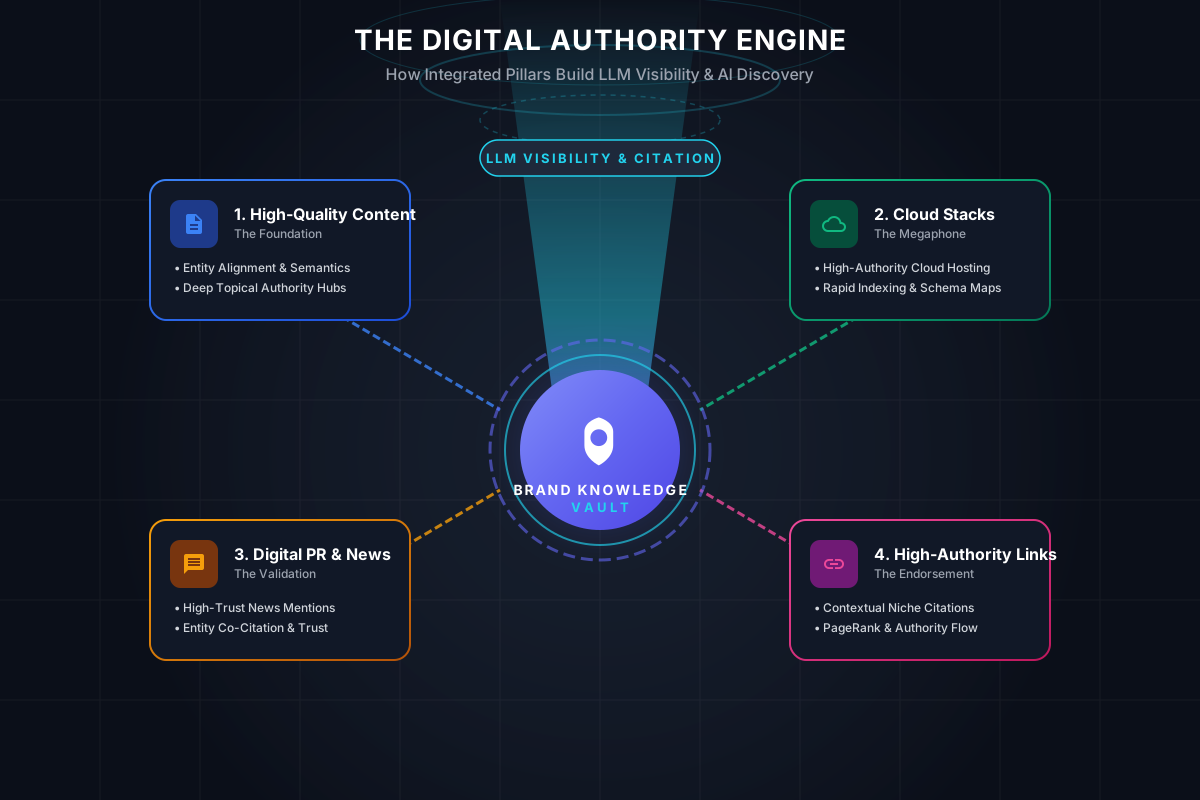
- Publishing clear, well-structured content that directly answers the specific questions buyers ask
- Ensuring information about your company is accurate and consistent across your website, directories, and third-party sources
- Making product and pricing information easy to find and unambiguous
- Building genuine topical authority in the areas you want to be known for, rather than spreading content thin across unrelated topics
This is where Answer Engine Optimization (AEO) comes in.
The Relationship Between AI Visibility and AEO
AI Visibility is the outcome – whether and how you show up in AI-generated answers. AEO is the practice aimed at improving that outcome.
Where traditional SEO focused on ranking pages in a list of search results, AEO focuses on structuring content and information so that AI systems can understand it, trust it, and surface it directly within a generated answer. The evolution has been gradual: SEO optimized for search engine result pages, GEO (generative engine optimization) emerged as a bridge concept for visibility within AI-generated search summaries, and AEO has become the broader discipline of optimizing specifically for answer-based, conversational AI experiences.
An AI Visibility audit tells you where you currently stand. AEO is the ongoing work of closing the gaps that audit reveals.
The Connection Between AI Visibility and Agentic Commerce
AI Visibility isn’t just about being mentioned – it’s increasingly about being transaction-ready. As AI tools evolve from answering questions to actively completing tasks on a user’s behalf, a new layer of buying behavior is emerging: agentic commerce, where an AI agent doesn’t just recommend a product but can initiate or complete a purchase or subscription on behalf of the user.
Consider a scenario where a buyer asks an AI assistant to “find and set up a project management tool under $50/month for a 10-person team.” In an agentic commerce environment, that assistant might not just recommend an option – it might attempt to complete part of the signup or purchase process directly.
For this to work reliably, businesses need more than good content. They need systems and interfaces that AI agents can actually interact with programmatically.
Why ACP/UCP Integration May Matter for Future AI-Driven Transactions
This is where ACP (Agentic Commerce Protocol) and UCP (Universal Commerce Protocol) integration becomes relevant. These types of protocols are designed to let AI agents interact with a business’s commerce systems in a structured, standardized way – checking pricing, availability, or initiating transactions without requiring a human to click through a traditional web checkout.
For B2B SaaS and service businesses, this means that being AI-visible in the future may not stop at being mentioned in an answer. It may extend to being technically ready for an AI agent to complete a signup, request a quote, or process a transaction on a buyer’s behalf. Businesses that treat AI Visibility and transaction-readiness as separate problems risk being discoverable but not actually reachable by the agentic tools their buyers are starting to use.
It’s an emerging space, and standards are still evolving – but preparing the groundwork now, rather than retrofitting later, is a reasonable position for businesses that expect agentic buying behavior to grow.
When a Business Should Consider an AI Visibility Audit
An AI Visibility audit is worth considering when:
- You operate in a competitive category where buyers are likely to compare vendors using AI tools
- You’ve noticed inconsistent or outdated information about your company circulating online
- You’re investing in content or SEO but have no visibility into how that effort translates to AI-generated answers
- You’re planning a rebrand, product launch, or positioning shift and want to understand your current AI baseline
- You’re exploring agentic commerce and want to know whether your business is even being surfaced before addressing transaction readiness
It’s not a one-time exercise. Because AI models, training data, and retrieval methods evolve, periodic re-auditing is essential to maintaining an accurate picture of where your business stands.
Want to know how your business appears in AI-powered discovery? AgentBuyable helps B2B SaaS and service businesses get discovered through AEO and AI Visibility, then prepare to get paid through agentic commerce with ACP/UCP integration. Start with an AI Visibility audit from AgentBuyable.
Frequently Asked Questions
What is an AI Visibility audit?
It’s an evaluation of whether and how a business appears in AI-generated answers, covering presence, accuracy, and competitive positioning.
Why is AI Visibility important?
Because a growing share of B2B research and buying decisions now happens through AI assistants and answer engines rather than traditional search, and businesses that aren’t visible there risk being left out of consideration entirely.
How do you measure AI Visibility?
By testing realistic buyer questions across multiple AI platforms and analyzing whether a business is mentioned, how accurately it’s described, and how it compares to competitors in those answers.
How often should a business conduct an AI Visibility audit?
There’s no fixed rule, but periodic re-testing is recommended since AI models and data sources change over time, and a one-time snapshot can become outdated.
Can an audit guarantee AI recommendations?
No. An audit can identify gaps and opportunities, but no service can guarantee that any specific AI tool will recommend or mention a business, since outputs depend on models and data outside any single company’s control.
Is AI Visibility relevant to service businesses and consultants?
Yes. Being associated with the right expertise and specialties in AI-generated answers can influence whether a firm is considered for a project, much like referral visibility does in traditional networks.
What is the difference between AI Visibility and AEO?
AI Visibility describes the outcome – how and whether a business appears in AI-generated answers. AEO (Answer Engine Optimization) is the practice of improving that outcome through content, structure, and information clarity.
How does AI Visibility relate to agentic commerce?
AI Visibility determines whether a business is discovered by AI tools in the first place; agentic commerce is the next step, where AI agents can act on a buyer’s behalf to complete transactions, making both discovery and technical readiness important.
What is ACP/UCP integration?
ACP (Agentic Commerce Protocol) and UCP (Universal Commerce Protocol) refer to emerging standards that allow AI agents to interact with a business’s commerce systems in a structured way, such as checking availability or initiating a purchase, without a human manually navigating a website.
What should you do after an AI Visibility audit?
Typically, businesses prioritize the gaps identified, work on AEO improvements to address them, and re-test over time to track whether their AI Visibility is improving.