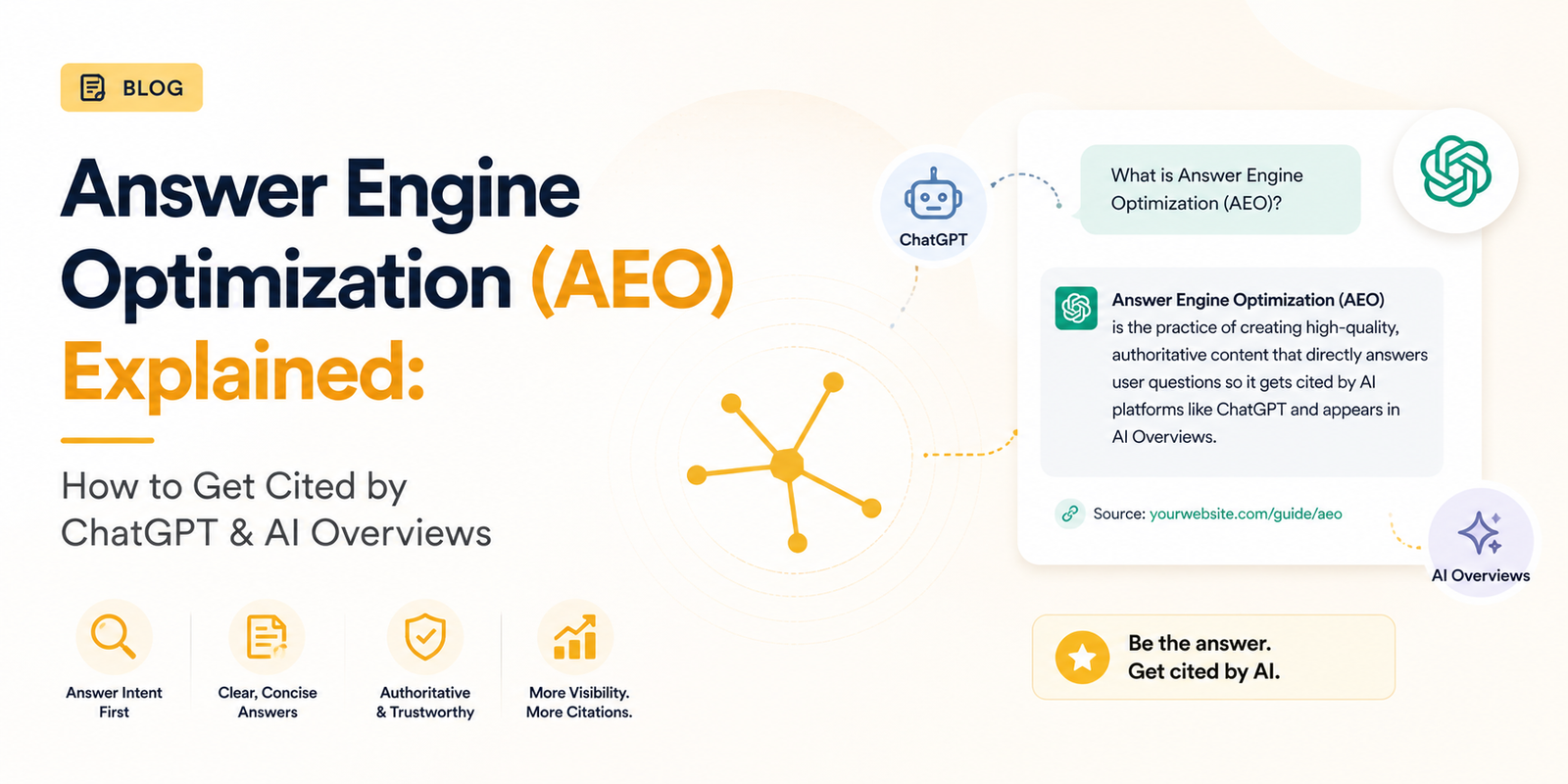
Answer Engine Optimization (AEO) Explained: How to Get Cited by ChatGPT & AI Overviews
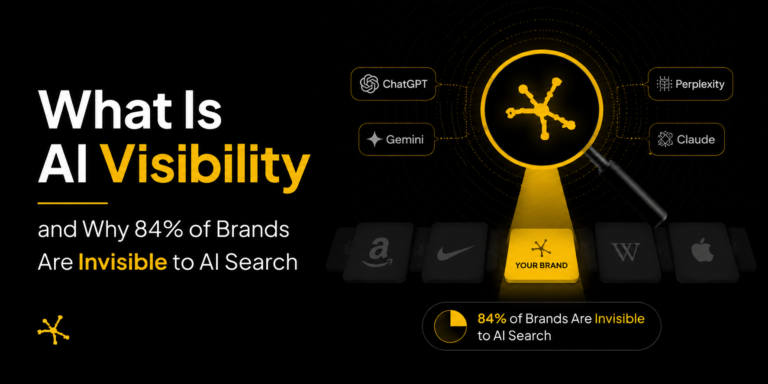
Search is no longer just about ranking on Google. AI Overviews now trigger on roughly 48% of tracked search queries, and millions of people ask ChatGPT, Perplexity, and Gemini questions they once would have typed into a search bar. If your business isn’t showing up inside those AI-generated answers, you’re invisible to a huge and fast-growing slice of your audience.
This is the shift behind Answer Engine Optimization (AEO) the practice of optimizing content so AI systems can find it, understand it, and cite it as the answer.
Traditional SEO was built for a world of ten blue links. That world still exists, but it’s shrinking. Today, a search engine might answer the question directly, without a single click to your website. A chatbot might recommend a competitor instead of you, simply because their content was structured in a way AI could understand and yours wasn’t.
That’s why AI search visibility has become a board-level priority for SaaS founders, ecommerce brands, agencies, and enterprise marketing teams alike. This guide breaks down exactly what answer engine optimization is, how AI search actually works, and how to build a content strategy that earns citations across Google AI Overviews, ChatGPT, Perplexity, Gemini, and Claude.
Whether you’re just discovering AEO services or already comparing answer engine optimization agencies, this article gives you a practical, no-fluff roadmap.
What Is Answer Engine Optimization (AEO)?
Definition
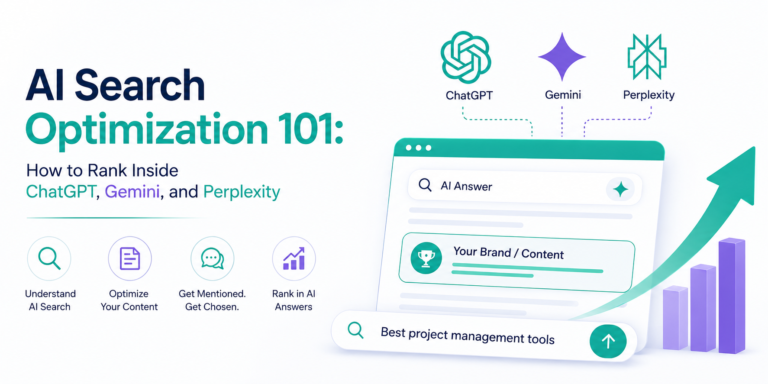
Answer Engine Optimization (AEO) is the practice of structuring, writing, and technically optimizing content so that AI-powered systems including Google AI Overviews, ChatGPT, Perplexity, Gemini, and Claude can accurately extract, understand, and cite it as a direct answer to a user’s question.
Where SEO optimizes for rankings on a search results page, AEO optimizes for inclusion in an AI-generated answer. The end goal isn’t just a click. It’s becoming the source an AI system trusts enough to quote, summarize, or recommend.
Key takeaway: AEO doesn’t replace SEO it builds on it. Strong technical SEO and authority are still the foundation. AEO adds the structure and clarity that AI models need to extract your content confidently.
How AEO Works
AI answer engines don’t “read” a page the way a human does. They break content into chunks, evaluate those chunks for relevance and trustworthiness, and then decide whether to pull from them when generating a response. AEO works by making that process easier and more reliable:
- Clear, direct answers appear early in the content, not buried under long introductions.
- Structured formatting (headings, lists, tables) helps AI models parse information into discrete, retrievable units.
- Semantic clarity ensures the AI understands not just what a page says, but what it means the entities, relationships, and context involved.
- Technical signals like schema markup tell AI crawlers exactly what type of content they’re looking at (a product, an FAQ, a how-to, a definition).
Why AI Assistants Need Structured Answers
Large language models generate responses by retrieving relevant snippets of content and synthesizing them into a coherent answer. If your content is a wall of unstructured text, the model has to do more work to extract a usable answer and it’s less likely to trust or select it.
Content that answers a question in the first sentence, defines key terms clearly, and organizes supporting details into scannable formats is simply easier for an AI system to lift and cite. That’s the entire premise of AEO: reduce the friction between your expertise and the AI’s ability to use it.
How AI Search Works
To optimize for AI answer engines, you need to understand what’s happening behind the scenes. Each platform works a little differently, but they share common mechanics.
Google AI Overviews
Google AI Overviews use a retrieval-augmented generation process. Google’s systems pull from indexed, high-quality pages, evaluate them against Google’s existing ranking signals (E-E-A-T, backlinks, relevance), and then generate a synthesized answer with citations. Being in Google’s index and ranking well organically remains a prerequisite AI Overviews tend to draw from pages that already perform well in traditional search.
ChatGPT
ChatGPT (with browsing or search-enabled modes) retrieves content from the live web and from its training data. For real-time queries, it functions similarly to a search-and-synthesize engine: it fetches current pages, extracts relevant sections, and cites sources inline. Well-structured, authoritative content increases the odds of being pulled into that synthesis.
Perplexity
Perplexity is built specifically as an “answer engine.” It retrieves multiple sources per query, ranks them by relevance and credibility, and presents a synthesized answer with numbered citations. Perplexity places heavy weight on content that directly and concisely answers the query making answer-first writing especially valuable here.
Gemini
Gemini, integrated across Google’s ecosystem, draws on Google’s knowledge graph and search index. It benefits from the same entity and structured-data signals that support AI Overviews, meaning strong schema markup and clear entity associations matter just as much.
Claude
Claude, when connected to search or used in research contexts, follows similar retrieval principles pulling from credible, clearly structured sources and favoring content where claims are easy to verify against the original page.
AI Citations, Retrieval Systems, Entity Understanding, and Knowledge Graphs
A few concepts tie all of this together:
- AI citations are the source links or references an AI system provides alongside its generated answer. Earning these is the primary goal of AEO.
- Retrieval systems are the mechanisms AI models use to search, rank, and pull relevant content before generating a response (this is the “retrieval” half of retrieval-augmented generation).
- Entity understanding refers to how well an AI system recognizes real-world things a person, brand, product, or concept and connects them to related information across the web.
- Knowledge graphs are structured databases (like Google’s Knowledge Graph) that map relationships between entities. Being recognized as an entity within these graphs strengthens your visibility across AI systems.
Why AEO Matters in 2026
AI Is Replacing Traditional Search Journeys
Search behavior has fundamentally shifted. Instead of typing a keyword and browsing ten results, users increasingly ask a full question and expect a direct, synthesized answer. This changes what “ranking” even means.
Zero-Click Searches Are the New Normal
A growing share of searches end without a single click to any website the user gets their answer directly in the search results or chat interface. This makes visibility inside the answer more valuable than ever, since it may be the only impression your brand gets.
Statistic callout: AI Overviews now appear on approximately 48% of tracked search queries meaning nearly half of all searches may resolve before a user ever visits a website.
Conversational Search Is Growing
People talk to AI assistants the way they’d talk to a knowledgeable friend in full sentences, follow-up questions, and natural language. Content written to match how people actually ask questions (not just how they type keywords) has a distinct advantage in this environment.
AI-Generated Recommendations Carry Weight
When ChatGPT or Perplexity recommends a product, service, or business by name, it functions like a trusted referral. Businesses that are cited by AI assistants often see referral traffic that already carries built-in credibility the user arrives having already been told your brand is a good answer.
Trust and Authority Still Decide the Winner
AI systems are conservative about what they cite. They favor sources that demonstrate real expertise, clear sourcing, and consistency across the web. This is why AI search visibility isn’t just a technical checklist it’s earned through genuine authority, much like traditional SEO always required.
AEO vs SEO vs GEO
These three terms are often used interchangeably, but they serve different purposes. Understanding the distinction helps you build a strategy that covers all three.
| Factor | SEO | AEO | GEO |
|---|---|---|---|
| Purpose | Rank on search engine results pages | Get cited as a direct answer by AI systems | Get referenced within generative AI responses broadly |
| Ranking Target | Google, Bing SERPs | Google AI Overviews, ChatGPT, Perplexity, Gemini, Claude | Any generative AI output (chat, voice, agents) |
| Optimization Style | Keywords, backlinks, technical SEO | Structured, answer-first content with schema and entity clarity | Semantic relevance and contextual authority across AI training/retrieval |
| Content Format | Long-form articles, landing pages | FAQs, definitions, how-tos, comparison content | Broad, high-quality, well-cited content across formats |
| Search Behavior | Keyword-based queries | Question-based, conversational queries | Multi-turn, agentic, and voice-based queries |
| Success Metrics | Rankings, organic traffic, CTR | AI citations, answer inclusion, referral traffic from AI tools | Share of voice within generative answers |
| Future Relevance | Still foundational, but declining in isolation | Rapidly growing as AI search adoption increases | Emerging, tied to the broader generative AI ecosystem |
SEO, Explained in Depth
SEO remains the foundation everything else is built on. Technical health, backlinks, and keyword relevance still determine whether Google trusts your site enough to index and rank it and by extension, whether AI Overviews consider it a candidate source at all.
AEO, Explained in Depth
AEO takes that foundation and adds a layer of structure specifically designed for extraction. It’s less about “ranking #1” and more about answering a specific question so clearly and completely that an AI system chooses your content as the source of truth.
GEO, Explained in Depth
Generative Engine Optimization (GEO) is the broadest of the three it covers optimizing for any generative AI output, including voice assistants and AI agents that take actions on a user’s behalf (like booking a service or completing a purchase). AEO is a critical subset of GEO focused specifically on answer-based queries.
How to Optimize Content for AI Answers
Here’s where strategy becomes action. These are the core techniques behind effective answer engine optimization.
Answer-First Writing
Put the direct answer to the core question in the first one to three sentences of any section. Save elaboration, context, and nuance for after the answer not before it.
Question-Based Headings
Structure H2s and H3s as actual questions (“How does AEO improve AI search visibility?” rather than “AEO Benefits”). This mirrors how users phrase queries to AI assistants and makes your content easier to match to their questions.
FAQ Optimization
Dedicated FAQ sections, each with a clear question and concise answer, are among the most frequently cited content types by AI Overviews and chat-based assistants.
Schema Markup
Structured data like FAQPage, HowTo, Article, and Organization schema explicitly tells search engines and AI crawlers what your content is. This isn’t optional anymore; it’s a baseline technical requirement for serious AI search visibility.
Semantic SEO
Semantic SEO means optimizing for meaning and intent, not just exact-match keywords. Covering a topic comprehensively including related subtopics, synonyms, and follow-up questions signals topical depth to both search engines and AI models.
Entity Optimization
Make sure your brand, products, and key people are clearly and consistently described across your website, Google Business Profile, Wikipedia/Wikidata (where applicable), and industry directories. Consistent entity signals help AI systems confidently associate information with your brand.
Internal Linking
Link related pages together using descriptive anchor text. This helps both users and AI crawlers understand how your content connects and reinforces topical authority across your site.
External Authority Citations
Reference credible, authoritative sources within your content. AI systems tend to trust content that itself demonstrates good sourcing practices it’s a signal of trustworthiness.
Structured Formatting
Use short paragraphs, descriptive subheadings, and a logical flow. Dense, unbroken blocks of text are harder for both humans and AI models to parse.
Tables, Bullet Points, and Lists
Comparative or sequential information should be presented in tables or lists whenever possible. These formats are especially easy for AI systems to extract cleanly.
Clear Definitions
Every key term relevant to your topic should have a clear, standalone definition somewhere in your content ideally in the first mention.
Fresh Content Updates
AI systems favor current, accurate information. Regularly updating statistics, examples, and screenshots signals that your content is actively maintained and reliable.
Best Content Formats for AEO
Certain content formats consistently perform better for AI citation because they naturally match how answer engines retrieve and present information:
- FAQs direct question-and-answer pairs are the easiest format for AI systems to lift verbatim in structure (if not in wording).
- How-to guides step-by-step instructions map well to HowTo schema and voice assistant responses.
- Checklists scannable, actionable, and easy to summarize.
- Comparison pages tables comparing options (like AEO vs SEO vs GEO above) are frequently cited when users ask “what’s the difference between X and Y.”
- Definitions concise, standalone explanations of a term or concept.
- Statistics pages original or well-sourced data points are highly citable, since AI systems often need to back up claims with numbers.
- Ultimate guides comprehensive resources that cover a topic from multiple angles, like this one.
- Product documentation clear, structured specs and FAQs help AI systems accurately represent what a product does.
- Knowledge hubs interlinked clusters of content around a core topic, reinforcing topical authority.
Common AEO Mistakes
Avoid these pitfalls, which routinely keep otherwise good content out of AI-generated answers:
- Keyword stuffing unnatural repetition hurts readability and doesn’t improve AI extraction; clarity matters more than density.
- Long introductions burying the answer under paragraphs of preamble reduces the odds an AI model finds it worth extracting.
- Thin content pages that don’t fully answer the question get passed over for more comprehensive sources.
- Missing entities content that doesn’t clearly name the brand, product, or concept it’s discussing is harder for AI systems to associate correctly.
- No schema markup without structured data, AI crawlers have to infer content type, which reduces confidence and citation likelihood.
- No FAQs missing one of the most citation-friendly formats available.
- Weak authority signals no author credentials, no sourcing, no demonstrated expertise.
- Poor readability dense jargon or overly complex sentences reduce both human engagement and AI extractability.
Tools for Answer Engine Optimization
A practical AEO workflow relies on a mix of familiar SEO tools and direct testing against AI platforms:
- Google Search Console monitor which queries surface your content, including those tied to AI Overview appearances.
- ChatGPT, Perplexity, and Gemini (direct testing) regularly ask these tools questions relevant to your business to see whether and how your brand is cited.
- Google Rich Results Test validate that your schema markup is implemented correctly and eligible for rich results.
- Screaming Frog audit site structure, headings, and metadata at scale to catch technical issues affecting crawlability.
- Semrush track keyword rankings, content gaps, and competitive AI visibility features where available.
- Ahrefs analyze backlink profiles and content performance to strengthen the authority signals AI systems rely on.
Why Businesses Need Professional AEO Services
Executing everything above consistently, technically correctly, and at scale is a significant undertaking. This is why many businesses turn to dedicated aeo services rather than trying to piece together AI search visibility internally.
Professional aeo services typically include:
Technical Optimization
Auditing site structure, page speed, crawlability, and indexation to ensure AI crawlers and search engines can access and process content reliably.
AI-Ready Content
Rewriting and restructuring existing content and producing new content using answer-first formatting, question-based headings, and semantic depth.
Entity Building
Establishing and reinforcing consistent brand, product, and founder entities across the web so AI systems can confidently connect information to your business.
Schema Implementation
Deploying and maintaining the correct structured data (FAQPage, HowTo, Product, Organization, Article) across a site’s most important pages.
Citation Optimization
Identifying which questions your audience is asking AI assistants and building content specifically designed to answer those questions clearly enough to be cited.
AI Monitoring
Ongoing tracking of how and where a brand appears (or doesn’t appear) across ChatGPT, Perplexity, Gemini, and Google AI Overviews, with adjustments made as AI models and ranking behavior evolve.
For businesses without in-house expertise in schema markup, entity SEO, and AI retrieval behavior, working with a specialized answer engine optimization agency is often the fastest path to measurable AI search visibility without the trial and error of figuring it out alone.
Expert tip: AEO isn’t a one-time project. AI models update frequently, and citation patterns shift. Treat AEO as an ongoing discipline, not a single audit.
Why Choose AgentBuyable
AI search isn’t just about being seen, it’s about being chosen, booked, and paid directly through AI-driven customer journeys. That’s the gap AgentBuyable is built to close.
AgentBuyable helps businesses get found, booked, and paid by AI agents like ChatGPT, Perplexity, and Gemini. As an Agentic Commerce platform, AgentBuyable is built specifically for businesses that want to become AI-ready not just optimized for clicks, but structured for the entire AI-driven customer journey, from discovery to transaction.
Here’s how AgentBuyable supports that journey:
- Get discovered by AI assistants through structured, citation-ready content and technical optimization aligned with how AI retrieval systems actually work.
- Improve AI search visibility with a strategy built around the same principles covered in this guide: entity clarity, schema markup, and answer-first content.
- Become AI-commerce ready positioning your business not just to be mentioned by AI, but to be transacted with directly.
- Get booked by AI agents as more consumers delegate scheduling and purchasing decisions to AI assistants, being structured for agentic booking becomes a competitive advantage.
- Get paid through AI-driven customer journeys closing the loop between AI discovery and actual revenue.
- Stay ahead of competitors many of whom haven’t yet adapted their content or infrastructure for AI search visibility at all.
AgentBuyable doesn’t promise guaranteed rankings or overnight results; no credible answer engine optimization agency can honestly claim that, given how new and fast-moving AI search still is. What AgentBuyable does offer is a structured, transparent approach to becoming genuinely AI-ready, built on the same technical and content fundamentals outlined throughout this article.
Ready to make your business AI-ready?
AgentBuyable helps businesses get found, booked & paid by AI agents like ChatGPT, Perplexity & Gemini.
Contact us today to improve your AI search visibility.
Conclusion
AI search isn’t a future trend; it’s already reshaping how people find businesses, compare options, and make decisions. With AI Overviews appearing on nearly half of tracked search queries, and AI assistants increasingly trusted for direct recommendations, answer engine optimization has become essential, not optional.
The businesses that win in this new landscape won’t just have good SEO. They’ll structure their content so AI systems can confidently extract, understand, and cite it, earning visibility in Google AI Overviews, ChatGPT, Perplexity, Gemini, and beyond.
Whether you tackle this in-house or partner with dedicated aeo services, the underlying principles stay the same: answer-first writing, clear structure, strong entities, and technical fundamentals like schema markup. Businesses that start building AI search visibility now will have a meaningful head start over competitors still relying on search strategies built for a pre-AI internet.
AI search is becoming the default way people discover products and services. The question isn’t whether to optimize for it, it’s how soon you start.