
Agentic Commerce for Small Business: Getting Found & Paid by AI Agents
Mark Pearson of Agent Buyable AI recently joined Jeremy Rivera on the Unscripted Small Business Podcast to talk about one of the fastest-moving shifts in small business marketing: AI agents that don’t just recommend your business, they can now pay you too.
Here’s what we covered, and what it means if you run a small or medium-sized business.
From Business Coaching to AI Consulting
My path here wasn’t a straight line. About five years ago I went through a stretch of major life changes all at once: COVID, the death of my parents, a move, a divorce. I needed to rebuild in a way that let me work remotely and make a real impact on people’s lives, so I got certified in life coaching, then pivoted into business coaching as clients kept asking me to help them run their businesses, not just think about them.
About two years into that, AI started showing up in client conversations. People who’d worked with me on the business side kept saying some version of, “This is great, but there’s this one thing I just want handled.” That’s what pulled me into AI consulting: going into small and medium-sized businesses, auditing their operations, and figuring out where AI could actually move the needle on revenue or profit.
Some of that work was front-of-house. I built a voice AI receptionist for a local lawyer so calls got answered 24/7 without him fielding every one personally. Some of it was back-office: at a seven-location car dealership group in Carlsbad, California, I helped their accounting team implement AI that took them out of the daily minutiae so they could focus on higher-value work. The audit process is really about figuring out which lever is worth pulling, and making sure a business doesn’t chase shiny-object AI that costs money and time without ever moving revenue or profit.
The Aha Moment: Agentic Commerce
About two months ago, I was watching Tom Bilyeu talk about agentic commerce and had a genuine “wait, what?” moment. Agentic commerce means AI agents completing transactions agent-to-agent, on your behalf. It exists now because Stripe and OpenAI formed a partnership last fall that lets large enterprise retailers sell agentically.
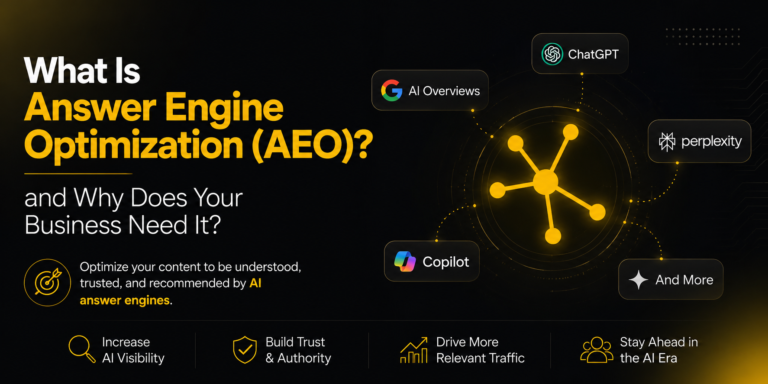
I’d been watching what PricewaterhouseCoopers does at the enterprise consulting level, and it clicked: I could adapt that same playbook for small and medium-sized businesses. That became two connected offers. First, getting found, which is AEO (answer engine optimization), essentially AI SEO. Second, getting paid, which is agentic commerce itself. My business coaching background turned into a focused offering: help SMBs get found by AI, and get paid by AI agents.
Where Agentic Commerce Is Actually Happening
Right now in the US, this is rolling out at the enterprise level first. Think Home Depot, Lowe’s, Etsy, Wayfair, and large retail brands like Coach or Urban Outfitters. You can already tell an AI agent to go buy something, or brainstorm a gift, and it can complete the purchase. On Shopify, storefronts are becoming agentic-ready too, connecting to payment rails like Visa, Mastercard, and PayPal through new protocols: Stripe and OpenAI’s Agentic Commerce Protocol, and Google’s Universal Commerce Protocol.
Local service businesses aren’t there yet, but the bridge is closer than people think. It can be as simple as an agent booking an appointment, a contractor sending a rep to measure a room, a chiropractor booking a set of ten appointments. Anywhere a human can book through a website, that same website can be made agentic-ready so an agent books directly onto the business’s calendar. From there, the transaction itself is protected by the same cryptographic and digital currency rails already backing your Visa card today.
Worth noting: the US is behind China on this front. On Alibaba’s Qwen platform, you can already tell an agent “plan a trip to Shanghai in two weeks, budget $5,000, book my travel” and it will research the weather, book trains and self-driving cars, and even offer to buy you a raincoat if rain is likely. That’s the ceiling we’re building toward here.
Productizing Services So Agents Can Read and Buy Them
A lot of the groundwork is business development, not technology. Take a paving contractor: instead of pricing every driveway from scratch in his head, he needs his top few services (driveways, sidewalks, walkways) broken into a real catalog, tagged with schema, assigned SKUs and pricing, so an agent can read it cleanly. All the marketing fluff that a human reads gets stripped away. What’s left are the specifics an agent actually needs, like whether that asphalt is rated to withstand plowing.
This is where engineering and marketing, historically separate roles, have to start talking to each other, especially at smaller companies where one or two people wear both hats. I saw this recently with a home care business owner, a CEO who built her company after 40 years in accounting and her own personal experience with elder care. Her challenge wasn’t the idea, it was staying at the director level instead of getting pulled into every technical how-to. Agentic readiness is simply a new marketing channel, the same way social media or paid advertising became channels. The job is to know it needs to get done and delegate it, whether that’s hiring internally or bringing in someone like me.
B2B Reorders Will Be the Bulk of It
It’s easy to picture agentic commerce as consumer shopping, but the real volume will be B2B: agents handling routine monthly reorders and general maintenance purchases. That’s going to become extremely common, alongside more customized, one-off purchases. And just like traditional SEO, there’s a real AEO advantage in simply being found, even for businesses that don’t want an agent closing the sale. Some businesses, like that home care company, still want a human team to close. But showing up in the first place matters either way.
Getting Cited: PR, Blogging, Recency, and Reviews
A lot of this comes back to fundamentals. I read a press release recently from a large company that forgot to actually name itself or link to its own site. That’s a missed opportunity, because AI agents are constantly crawling the web looking for credibility signals. The more places your business gets seen and cited accurately, whether in press releases, case studies, or blog posts, the more an AI builds trust in recommending you to its human.
Blogging in particular has gotten more valuable, not less, because consistency and recency build that trust. The same goes for being present on social platforms, forums like Reddit, and video platforms like YouTube and TikTok. You don’t need to be everywhere; being genuinely present in a few places often beats being thin across all of them. For a local business, this can be as simple as building up Google Business Profile reviews consistently over time.
Every LLM Optimizes Differently
Here’s the harder part: Google, GPT, Gemini, and Perplexity each have their own way of finding and verifying a recommendation. Some pull from Bing, some effectively run Google queries under the hood, some (like Perplexity) have been reported to draw on other search sources directly. There’s also a fast-growing advertising layer now live on platforms like GPT. The practical takeaway is the same regardless of the plumbing: get your accurate story out across as many channels as possible so different models can cross-reference and verify you as a trusted source.
Backlinks Still Matter, Maybe More
A natural question: do backlinks, the foundation of Google’s original PageRank approach, still matter in an AI-answer world? Yes, arguably more than ever. AEO is built on top of SEO, not a replacement for it. As you do genuinely good SEO, you are doing AEO. The specifics of visibility to LLMs have their own nuances, but the foundational work (backlinks, structured content, consistent citations) still carries the business or its clients into these AI-driven results.
Entity Clarity: Telling Google (and Everyone Else) Exactly What You Are
Getting recognized as a distinct “entity” matters more than people think. A show described only as a “children’s show” instead of the more specific “children’s cartoon” can fail to surface for the right queries, until its listings on IMDb, Wikipedia, and the publisher’s site are corrected. I’ve seen the same issue with a product that Google’s AI Overview interpreted as a verb instead of a brand, largely because the company never had a clear About page. If you don’t tell Google (or any model) clearly what your company is, it can’t tell anyone else.
Write for the Human and the Bot
The idea of writing “only for humans” misses how information actually flows now: a human tells their AI agent what they want, that agent talks to another agent or data source, and eventually a recommendation comes back to a person. Content has to work for both audiences, which means machine-readable structure and language a human still appreciates. Image-only websites are the cautionary tale here. They read beautifully to a person and are functionally invisible to search engines and agents alike. Some businesses and agencies are now going further, building a parallel, machine-only layer (structured data, LLM-readable files) sitting on the same URL right alongside the human-facing site.
Use AI to Create, Not to Offload
My honest, slightly controversial take: cognitive offloading is a real risk. AI is an incredible tool for creating, for research, for expanding what one or two people can build. It’s a much worse tool if you hand it full agency over your decisions and stop checking its work. It hallucinates. It occasionally cites a source that isn’t actually right. Treat it the way you’d treat a reporter’s sourcing: verify, don’t just accept. The businesses and people who get the most value from AI right now are the ones using it to create more, not the ones using it to think less.
Where to Find Mark
I’m on LinkedIn as Mark D. Pearson. For more on getting found by AI and, where it makes sense, getting paid by AI agents, visit AgentBuyable.ai. Get found, get chosen, get paid by AI.
Key Takeaways
- Agentic commerce has two halves: getting found by AI (AEO/LLM visibility) and getting paid by AI agents. Enterprise retailers like Home Depot, Lowe’s, Etsy, Wayfair, and Shopify storefronts are already transacting agent-to-agent through protocols built by Stripe/OpenAI and Google.
- Service businesses can productize too. A chiropractor’s 10-pack or a contractor’s driveway job can become schema-tagged, SKU’d catalog items agents can read and book or buy, even for businesses that aren’t traditional ecommerce.
- The biggest volume will be quiet B2B reorders, not flashy consumer purchases.
- Recency and breadth build AI trust: consistent blogging, fresh citations, Google Business Profile reviews, and presence across the channels each LLM crawls.
- Good SEO is already AEO. Backlinks, entity clarity, and accurate naming still matter.
- Write for the human and the bot: define what you do in machine-readable language while keeping the human experience intact.
- Use AI to create, not to offload. Verify its sources and keep your own creative agency in the loop.