
Why AI Discoverability and Web Discoverability Are No Longer the Same Thing
Introduction
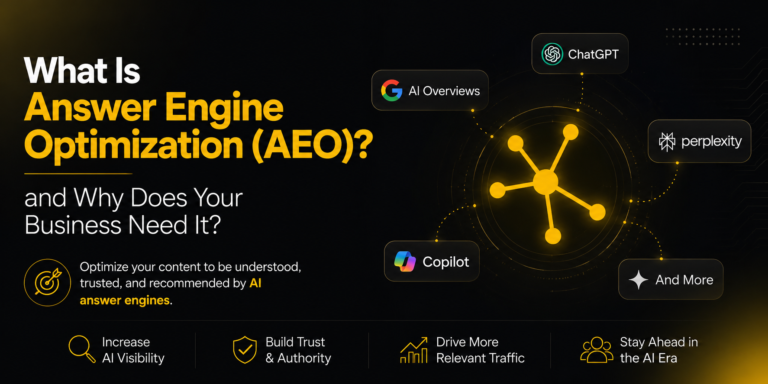
For most of the internet’s commercial history, being discoverable online meant one thing: ranking well in search engines. Build a well-structured website, earn backlinks, optimize for keywords, and customers would find you through Google. Web discoverability and online discoverability were effectively synonymous. That is no longer true. AI assistants like ChatGPT, Gemini, Perplexity, and Copilot are becoming primary discovery channels for a growing share of high-intent customers, and these systems evaluate, understand, and surface businesses through entirely different mechanisms than search engines do. A business can have strong web discoverability and near-zero AI discoverability simultaneously. Understanding this divergence is the starting point for any serious AI visibility strategy. AgentBuyable helps businesses build AI discoverability as a distinct discipline through structured data, entity optimization, content strategy, and AI readiness.
How Web Discoverability Works
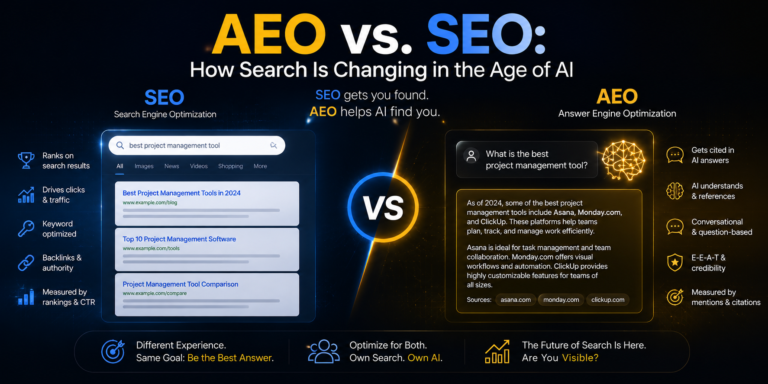
Web discoverability is built on search engine optimization. Search engines crawl websites, index content, evaluate authority signals primarily through backlinks, assess technical factors including page speed and mobile responsiveness, and rank pages against keyword queries in a results list. The customer sees a ranked list and chooses which result to click.
The signals that drive web discoverability are well understood and have been refined over decades. Keyword relevance, domain authority, technical performance, content depth, and backlink profiles are the primary levers. A business that invests consistently in these areas builds web discoverability that compounds over time.
Web discoverability is fundamentally about ranking within a list that humans browse and select from. The search engine’s job is to produce an ordered list. The human’s job is to evaluate that list and choose.
How AI Discoverability Works Differently
AI discoverability operates on a completely different model. AI assistants do not produce ranked lists for humans to browse. They generate direct responses, recommendations, and in increasingly agentic contexts, completed transactions. The customer does not see a list of options and choose. They receive a recommendation, a summary, or a completed action.
This fundamental difference in output format produces a completely different set of input requirements. AI systems are not evaluating your page against keyword queries to assign a ranking position. They are trying to understand your business as an entity, verify the accuracy and consistency of information about it, assess its trustworthiness as a source, and determine whether it is a relevant and reliable match for the customer’s expressed intent.
The signals that drive AI discoverability include structured data markup that gives AI systems explicit machine-readable information about your business, entity consistency across multiple sources that builds verification confidence, content that directly answers specific questions rather than targeting keyword density, topical depth that signals genuine expertise, and in agentic commerce contexts, transaction infrastructure that allows AI systems to act on recommendations rather than just make them.
None of these are the primary signals that drive Google rankings, and strong Google rankings do not automatically produce strong AI discoverability.
Where the Two Systems Diverge Most Sharply
Several specific areas illustrate how fundamentally different web and AI discoverability have become.
Schema Markup
Schema markup has some influence on traditional search through rich result eligibility, but it is not a primary ranking factor. For AI discoverability, it is foundational. Without schema markup, AI systems have no explicit machine-readable signals about business identity, services, pricing, or booking capability. A site without schema can rank well on Google while being nearly opaque to AI systems.
Content Structure
Traditional SEO rewards comprehensive content that covers a topic thoroughly and includes relevant keywords at appropriate density. AI discoverability rewards content that answers specific questions directly and completely, with clear structure that allows AI systems to extract and cite information without significant reinterpretation. The same content can perform well in one system and poorly in the other.
Backlinks vs. Entity Consistency
Backlink profiles are the dominant authority signal in traditional search. AI systems place far greater weight on entity consistency, the degree to which your business name, address, phone number, services, and other information is consistent across your website, Google Business Profile, directories, and social profiles. A business with strong backlinks but inconsistent entity information can rank highly on Google while being treated as unreliable by AI systems.
Keyword Optimization vs. Question Alignment
SEO content is optimized around keywords that customers use in search queries. AI-optimized content is built around the questions customers ask conversational AI systems, which are often phrased as complete natural language questions rather than keyword fragments. A page optimized for “dental cleaning cost” performs differently in Google than a page that directly answers “How much does a dental cleaning cost and what does it include?”
Transaction Readiness
Traditional web discoverability has nothing to do with whether a business can complete transactions programmatically. AI discoverability in agentic commerce contexts increasingly favors businesses that support autonomous transactions through booking APIs, machine-readable pricing, and payment protocols like Stripe’s ACP. This dimension of AI discoverability has no equivalent in traditional web discoverability.
The Risk of Assuming They Are the Same

Many businesses are making significant investment decisions based on the assumption that web discoverability and AI discoverability are effectively the same thing, or that strong performance in one automatically produces strong performance in the other. This assumption is producing a specific and measurable gap.
Businesses that invest exclusively in traditional SEO are building web discoverability that does not transfer to AI systems. They may maintain strong Google rankings while becoming progressively more invisible in the AI-assisted discovery channels where high-intent customers are increasingly active. The gap between their web visibility and their AI visibility widens as AI adoption grows without any corresponding investment in the signals that drive AI discoverability.
The commercial cost of this gap is difficult to see in the short term because AI-assisted discovery is still a minority of total customer acquisition for most service categories. It is becoming less difficult to see as AI assistant usage grows among exactly the high-intent, research-oriented customer segments that service businesses most want to reach.
Building AI Discoverability as a Distinct Discipline
Treating AI discoverability as a distinct discipline rather than an extension of existing SEO practice requires investing in the specific signals that AI systems use to evaluate and recommend businesses.
Structured data implementation covering the full range of relevant schema types is the foundational investment. This is not a minor SEO enhancement. It is the primary machine-readable communication layer between your business and AI systems, and it requires comprehensive and accurately maintained implementation to function effectively.
Entity consistency management ensures that AI systems receive consistent, verifiable information about your business across every source they reference. This is an ongoing discipline rather than a one-time task, requiring regular audits of how your business information appears across platforms and prompt correction of inconsistencies.
Content strategy built around question alignment rather than keyword optimization produces content that AI systems can extract and cite directly. This means identifying the specific questions customers ask at each stage of their decision process and providing direct, specific, citable answers.
In service business contexts, transaction readiness adds a dimension to AI discoverability that has no parallel in traditional SEO. Building booking APIs, machine-readable service catalogs, and ACP-compatible payment infrastructure extends AI discoverability from the recommendation layer into the transaction layer, allowing AI systems to complete customer journeys rather than just initiate them.
Why They Will Continue to Diverge
The gap between web discoverability and AI discoverability is not a temporary transitional state. It reflects fundamental architectural differences between search engines and AI systems that are not converging. Search engines are getting smarter, but they remain fundamentally in the business of producing ranked lists. AI systems are fundamentally in the business of generating direct responses and increasingly completing transactions.
As AI systems become more capable and more integrated into commerce workflows, the transaction readiness dimension of AI discoverability will become more important relative to the content and structured data dimensions. Businesses that build only the content and schema layer of AI discoverability without addressing transaction infrastructure will face a second gap as agentic commerce capabilities mature.
Investing in AI discoverability as a distinct and evolving discipline now positions businesses ahead of the adoption curve rather than behind it.
Benefits of Treating AI Discoverability Separately
Businesses that build AI discoverability as a distinct practice alongside traditional SEO gain presence in the discovery channels where high-intent customer activity is growing fastest. Structured data investment strengthens both AI discoverability and traditional search performance simultaneously, producing returns across both channels. Content built for question alignment performs well in AI-generated responses and in the conversational search queries that are growing as a share of total search volume. Entity consistency management improves reputation signals across every platform that references the business. Transaction readiness creates commercial capability in AI-assisted channels that competitors without this infrastructure cannot match.
Why Businesses Should Use AgentBuyable
Building AI discoverability as a discipline distinct from traditional SEO requires expertise in structured data, entity management, question-aligned content strategy, and where relevant, agentic commerce infrastructure. AgentBuyable helps service businesses improve AI discoverability through structured data implementation, entity optimization, question-focused content strategy, and transaction readiness. It identifies AI visibility gaps, strengthens machine-readable signals, and helps businesses become easier for AI platforms to discover, understand, recommend, and transact with.
Conclusion
Web discoverability and AI discoverability have diverged into distinct disciplines with different signals, different optimization strategies, and increasingly different commercial implications. Businesses that treat them as equivalent are building web visibility that does not transfer to the AI-assisted discovery channels where customer acquisition is increasingly happening. The businesses that recognize this divergence early and invest in AI discoverability as a distinct practice will build a compounding advantage in the channels that matter most as AI assistant adoption continues to grow. AgentBuyable helps service businesses strengthen AI discoverability by improving structured data, entity consistency, content quality, and AI readiness for long-term visibility across AI platforms.
FAQs
If my business ranks well on Google, does that mean it has strong AI discoverability?
Not necessarily. Google rankings and AI discoverability depend on largely different signals. Strong keyword optimization, backlink profiles, and technical SEO performance drive Google rankings but do not directly produce the structured data, entity consistency, and question-aligned content that AI systems require to discover and recommend a business accurately.
Is investing in AI discoverability worth it if most customers still use Google search?
Yes, for two reasons. First, AI assistant usage among high-intent customers is growing rapidly, and early investment builds discoverability before competitors establish advantages in these channels. Second, many AI discoverability investments including schema markup and entity consistency also strengthen traditional search performance, so the investment produces returns across both channels.
What is the single biggest difference between web and AI discoverability?
The output format difference is the most fundamental. Search engines produce ranked lists that humans browse and select from. AI systems produce direct responses, recommendations, and increasingly completed transactions. This difference in output format drives the entirely different input requirements that make web and AI discoverability distinct disciplines.
Can a business have strong AI discoverability without strong web discoverability?
In principle yes, though in practice the two tend to reinforce each other. A business with comprehensive schema markup, strong entity consistency, and question-aligned content will typically have reasonable web performance as well as strong AI discoverability. The more relevant risk is the reverse, strong web discoverability without AI discoverability, which is the common state for businesses that have invested heavily in traditional SEO without addressing AI-specific signals.
How quickly can a business build meaningful AI discoverability from scratch?
Foundational elements including schema markup implementation and entity consistency corrections can produce meaningful improvements in AI readability relatively quickly. Content strategy adjustments and authority building develop over a longer period. The full compound value of AI discoverability investment accumulates over time, which is why starting early matters.
How does AgentBuyable approach AI discoverability differently from a traditional SEO agency?
AgentBuyable is built specifically for AI discoverability rather than traditional search optimization. It focuses on structured data, entity consistency, question-focused content, and transaction readiness to help businesses become more visible across AI platforms. Rather than relying only on traditional SEO signals, it helps businesses improve how AI systems discover, understand, recommend, and interact with their services.