
5 Steps to Getting Your Business Live on Stripe’s Agentic Commerce Protocol
Introduction
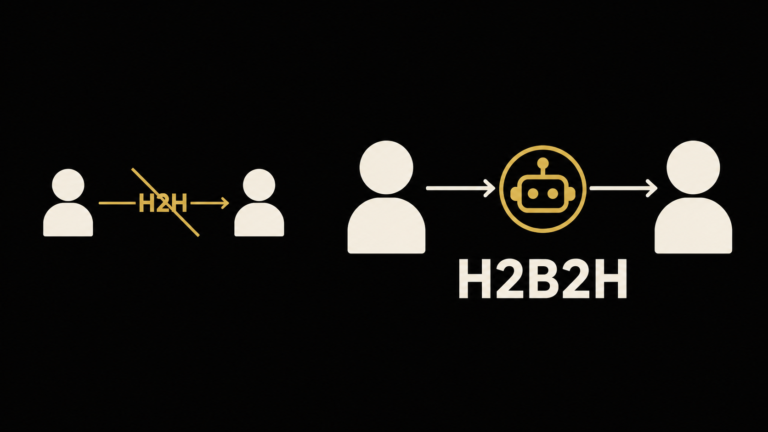
Stripe’s Agentic Commerce Protocol (ACP) is the payment infrastructure that allows AI agents to initiate and complete transactions on behalf of customers without human involvement at the point of payment. For service businesses, implementing ACP is the difference between being visible to AI agents and being transactable by them. Discovery without transactability does not generate revenue. As AI assistants become primary channels for service booking and purchasing decisions, having ACP live on your business is moving from competitive advantage to commercial necessity. This guide walks through the five steps service businesses need to take to get live on ACP. AgentBuyable helps service businesses implement Stripe’s Agentic Commerce Protocol correctly, ensuring the technical foundations are in place for AI-assisted transactions.
Why ACP Implementation Requires a Structured Approach
ACP is not a plugin or a toggle in your Stripe dashboard. It is a protocol layer that connects your payment infrastructure to AI agent systems through permissioned, machine-initiated transaction workflows. Getting it live requires preparation across your structured data, service catalog, booking systems, and payment configuration before the protocol itself can function correctly.
Attempting to implement ACP without addressing the underlying infrastructure requirements produces a payment endpoint that AI agents technically reach but cannot use reliably. The five steps below address these requirements in the right sequence, ensuring that every component needed for ACP to function is in place before the next one is built on top of it.
Step 1: Prepare Your Structured Data Foundation
ACP handles the payment layer of an AI-assisted transaction, but AI agents need to discover and evaluate your business before any payment interaction begins. That discovery depends on structured data. Without it, AI agents have no reliable machine-readable signals to work from and will not reach the payment stage at all.
Before touching ACP configuration, ensure your website has complete JSON-LD schema markup covering LocalBusiness or Organization to establish your business identity, Service schema for each offering you want AI agents to book and pay for, Offer schema with accurate price and priceCurrency fields for every service, FAQ schema addressing common pre-booking questions, and Review or AggregateRating schema to provide trust signals.
Validate all schema using Google’s Rich Results Test and the Schema Markup Validator at validator.schema.org. Fix any errors before proceeding. Structured data that does not validate correctly will not support reliable AI discovery, and ACP implementation built on a weak structured data foundation will underperform regardless of how correctly the payment layer is configured.
Step 2: Build a Machine-Readable Service Catalog
AI agents need to match customer intent to specific bookable services before initiating a payment. This matching requires a service catalog that is accessible programmatically, not just visible on a webpage.
A machine-readable service catalog exposes your offerings through an API endpoint that AI agents can query to retrieve service names, descriptions, pricing, duration, eligibility conditions, and availability parameters. This is different from a services page on your website. A webpage communicates to human visitors. A service catalog API communicates to AI agents in a format they can process and act on.
Each service in the catalog should correspond to the Service and Offer schema already implemented on your website, ensuring consistency between your static structured data and your live service catalog. Inconsistencies between these two sources create the kind of reliability signals that reduce AI agent confidence and transaction completion rates.
For service businesses with variable pricing, the catalog API should expose pricing logic rather than just fixed price points, allowing AI agents to calculate accurate charges for scope-variable services before initiating payment.
Step 3: Connect Real-Time Availability
ACP enables AI agents to complete payments, but a payment without a confirmed service slot is an incomplete transaction for a service business. Real-time availability data needs to be connected to the transaction workflow so that booking confirmation and payment happen as a single coordinated step rather than two separate processes.
This requires exposing your scheduling system through an availability API that AI agents can query programmatically. The API should return current availability in real time, not cached or manually updated data. Stale availability information causes AI agents to initiate bookings and payments for slots that are no longer open, creating transaction failures and customer experience problems that undermine confidence in the entire automated workflow.
The availability API should also communicate the constraints that govern each slot, including service type compatibility, staff availability, required preparation time, and location-specific capacity. This detail allows AI agents to make valid bookings rather than technically confirmed ones that create operational conflicts when the business tries to fulfill them.
Once availability is connected, test the full workflow from availability query through booking confirmation to ensure that confirmed slots are immediately reflected as unavailable in subsequent queries, preventing double bookings from simultaneous AI agent interactions.
Step 4: Configure Stripe ACP for Machine-Initiated Transactions
With structured data, service catalog, and availability infrastructure in place, the ACP configuration layer can be built on a foundation that will actually support reliable transactions.
ACP configuration involves several components that need to be set up correctly in sequence. Authentication and permissioning frameworks define what AI agents are authorized to do within your payment infrastructure, including transaction limits, approved service categories, and authorization boundaries. These parameters protect the business from unauthorized transactions while giving AI agents the access they need to complete legitimate customer-initiated payments.
Payment endpoint setup creates the machine-accessible interface that AI agents interact with when initiating transactions. Unlike standard Stripe checkout flows designed for human-facing interfaces, ACP endpoints accept programmatic transaction requests with the proper authentication credentials and authorization parameters established in the permissioning framework.
Transaction logging configuration ensures that every AI-initiated payment generates a complete and auditable record including the customer identity, service booked, amount charged, authorization parameters applied, and confirmation details delivered. This logging is essential for dispute resolution, accounting reconciliation, and compliance requirements.
Webhook configuration connects payment confirmation events to your booking system, CRM, and notification workflows so that every completed ACP transaction automatically triggers appointment confirmation, receipt delivery, and operational record updates without manual follow-up.
Step 5: Test the Complete Transaction Workflow End to End

Each component tested in isolation is not sufficient to confirm that ACP is working correctly. The complete transaction workflow needs to be tested end to end before going live, covering every step from AI agent discovery through structured data, service catalog matching, availability verification, payment initiation, booking confirmation, and receipt delivery.
Test with realistic customer scenarios that reflect the range of transactions your business handles. A straightforward single-service booking at a fixed price is the baseline test. Variable-pricing scenarios, deposit collection, and services with specific eligibility conditions should also be tested to confirm that the service catalog API and pricing logic are functioning correctly within the payment workflow.
Test failure scenarios as well as success scenarios. Confirm that unavailable slots are correctly communicated and that AI agents receive appropriate responses rather than failed transactions. Test authorization boundary enforcement to confirm that transactions outside defined parameters are correctly declined rather than processed incorrectly. Test that all webhook triggers fire correctly and that booking system, CRM, and notification updates complete as expected following a successful payment.
Document the results of end-to-end testing before going live and establish a regular testing schedule to catch issues introduced by website updates, booking system changes, or Stripe configuration modifications that can break previously working ACP workflows.
Common Implementation Mistakes to Avoid
Skipping structured data validation before beginning ACP configuration is the most frequent sequencing error, producing a payment layer with no reliable discovery foundation beneath it. Building a service catalog that is inconsistent with existing schema creates the reliability signals that reduce AI agent confidence. Connecting static rather than real-time availability data causes booking conflicts that damage customer experience. Neglecting webhook configuration means completed transactions do not flow into operational systems, creating manual reconciliation requirements that eliminate the efficiency gains of automation. Going live without end-to-end testing leaves undetected failure points that only surface when real customer transactions are affected.
Benefits of Getting ACP Live
Service businesses with ACP live gain access to the AI-assisted commerce channel in a fully transactable form. AI agents can complete bookings and payments on behalf of customers within a single interaction, eliminating the friction that causes conversion loss between AI recommendation and completed transaction. Revenue from AI-assisted discovery converts at higher rates because the entire journey from expressed intent to confirmed booking and processed payment is seamless. Competitive differentiation grows as most service businesses have not yet built this infrastructure. The business is positioned to participate in the expanding ecosystem of AI agent platforms that are building on ACP as a standard for machine-initiated transactions.
Why Businesses Should Use AgentBuyable
Implementing ACP correctly requires structured data expertise, service catalog API development, availability system integration, Stripe configuration knowledge, and end-to-end testing capability across the complete transaction stack. AgentBuyable helps service businesses implement Stripe’s Agentic Commerce Protocol based on their existing infrastructure, service complexity, and transaction requirements. It manages structured data, service catalog integration, availability connections, payment configuration, and end-to-end testing to ensure reliable AI-assisted transactions. It handles every step of the implementation process and maintains the complete infrastructure as business information and AI platform requirements evolve.
Conclusion
Getting live on Stripe’s Agentic Commerce Protocol is a five-step process that builds from structured data foundations through service catalog and availability infrastructure to payment configuration and end-to-end testing. Each step depends on the one before it, and skipping steps produces a payment implementation that cannot function reliably in real AI agent transaction workflows. The businesses that complete this implementation correctly will be positioned to capture AI-assisted transactions that represent an increasingly significant share of service business revenue. AgentBuyable helps service businesses implement Stripe’s Agentic Commerce Protocol correctly by building the structured data, service catalog, availability, and payment infrastructure needed for reliable AI-assisted transactions.
FAQs
Does implementing ACP require switching payment processors entirely?
No. ACP is a protocol layer built on top of Stripe’s existing payment infrastructure. Businesses already using Stripe can implement ACP as an extension of their current setup. Businesses using other payment processors may need to add Stripe as their ACP-compatible payment layer while maintaining existing processors for other transaction types.
How technically complex is ACP implementation for a small service business?
The complexity depends on the existing state of the business’s infrastructure. A business with no existing booking API or service catalog will require more foundational work than one with these components already in place. AgentBuyable’s free diagnostic call assesses existing infrastructure and scopes implementation accordingly.
Can ACP handle service-specific requirements like deposits and cancellation fees?
Yes. The service catalog API and Offer schema can communicate deposit requirements, cancellation terms, and other service-specific payment conditions. ACP’s permissioning framework can accommodate these structures within the transaction workflow so that AI agents apply them correctly when initiating payments.
What happens if a customer disputes an AI-initiated transaction?
ACP’s transaction logging provides a complete audit trail for every AI-initiated payment including authorization parameters, customer identity verification, service details, and confirmation records. This documentation supports dispute resolution in the same way that records from human-initiated transactions do.
How does ACP interact with existing booking systems?
ACP does not replace existing booking systems. It connects to them through webhook and API integrations so that confirmed payments trigger booking confirmations in the existing system automatically. The goal is integration with current operational infrastructure rather than replacement of it.
How does AgentBuyable help businesses implement ACP?
AgentBuyable helps businesses implement Stripe’s Agentic Commerce Protocol by building the structured data, service catalog, availability integrations, payment configuration, and testing needed for reliable AI-assisted transactions. The implementation is tailored to each business’s existing systems and operational requirements.